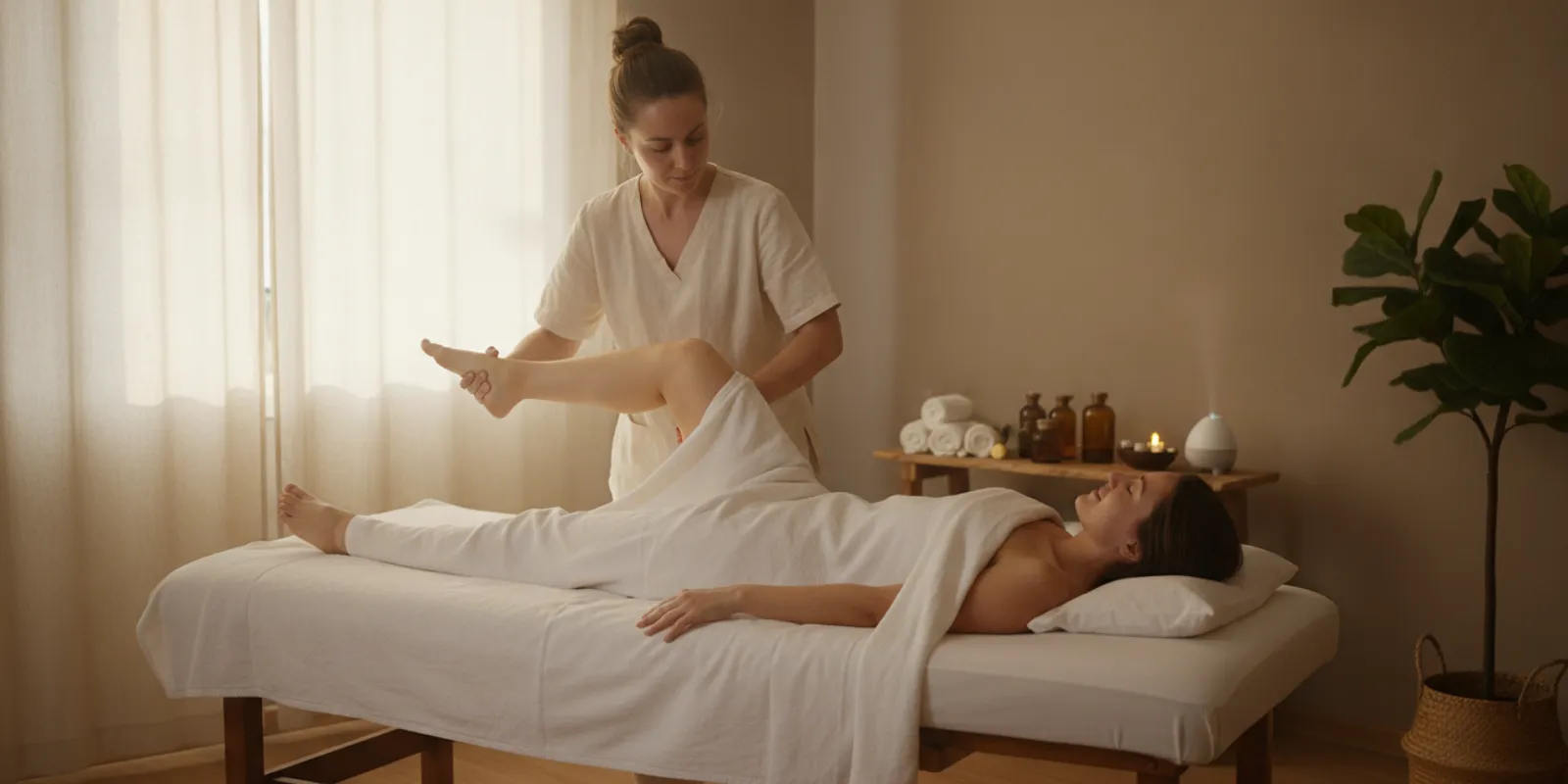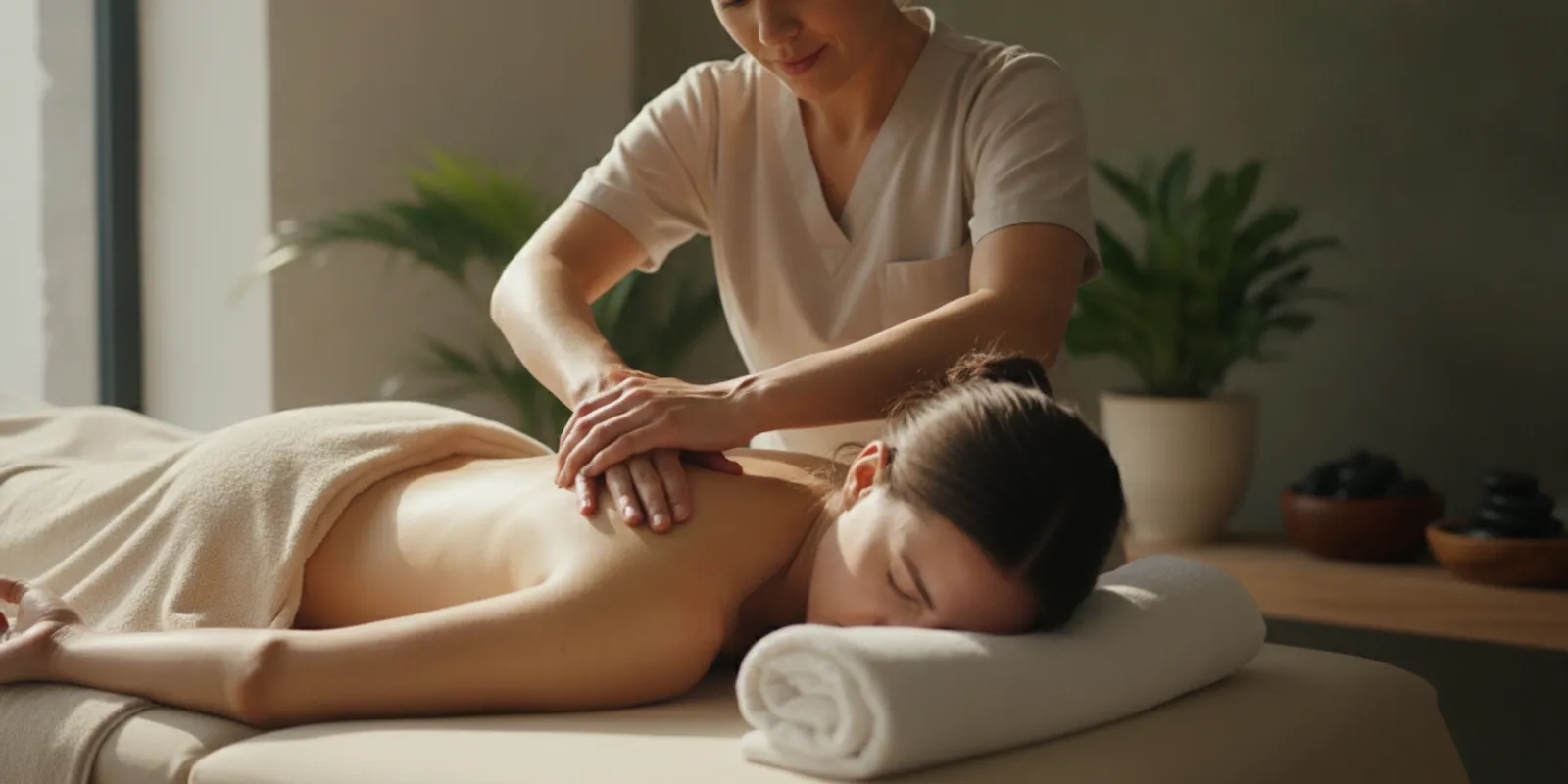
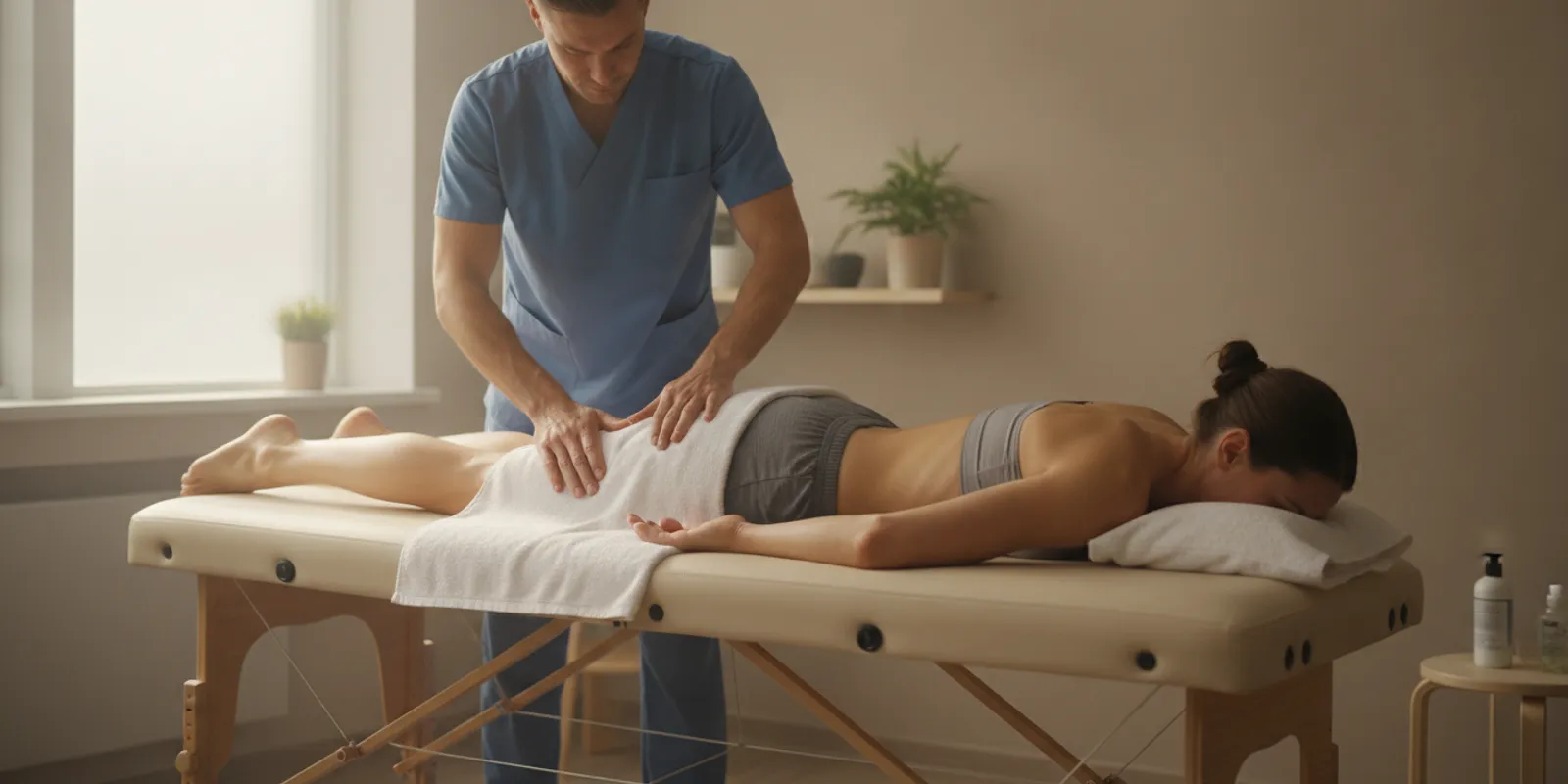
Triathlon training asks your body to handle repeated swimming, cycling, and running, often with limited time between sessions. Massage for triathletes may be one way to support comfort and recovery, but it is not a substitute for training adjustments, sleep, appropriate fueling, or medical care. The best approach depends on what you are feeling, what your next workout requires, and how your body responds to touch.
Ask about planning a massage session
What can massage realistically offer a triathlete?
Massage can provide hands-on time to address areas that feel tense or overworked and a chance to check in with your comfort level. People may find it relaxing, or feel that familiar muscle tightness eases temporarily. But responses differ. Massage does not make a training plan safe by itself, repair every injury, or guarantee faster race times.
A review of sports massage research found no evidence that massage directly improves athletic performance, while noting it may somewhat improve flexibility and delayed-onset muscle soreness (DOMS). That is a measured conclusion, not a promise that a session will change your next result. The research is summarized in this review of sports massage, performance, and recovery. It is sensible to treat massage as one possible comfort and recovery tool, then judge its usefulness by your own response.
Triathletes also have different reasons for booking. One athlete may want a quiet reset after a demanding block. Another may be managing ordinary post-training soreness, while someone else may have a new pain that needs assessment first. These situations call for different choices. A therapist can adjust pressure and focus, but cannot diagnose an injury or replace your clinician’s advice.
How should you time massage around training?
There is no single schedule that fits every athlete, event, or session. Consider the purpose of the massage and the work around it. A new or particularly intense treatment close to a key workout or race may leave you feeling tender or unusually relaxed. That can be inconvenient when you need to train, travel, or compete. If you already know how your body responds to a familiar, comfortable session, you have more information to plan with.
- During a regular training week: Consider a session on a day that gives you room to notice how you feel afterward. Avoid trying a new technique immediately before an important workout.
- After a hard workout: First allow time for your normal cool-down and basic recovery routine. If you are acutely sore, unusually fatigued, or dealing with pain that changes your movement, discuss those symptoms before deciding whether massage is appropriate.
- Before an event: Keep the aim conservative and familiar. A race week is usually a poor time to experiment with unfamiliar pressure, duration, or techniques. Some athletes prefer a brief, gentle session; others may prefer not to book at all.
- After a race: Let your immediate condition guide the decision. General tiredness is different from a fall, a suspected injury, severe swelling, or feeling unwell. Those concerns warrant medical guidance rather than massage as a first response.
Research about perceived recovery strategies among triathletes provides useful context, but it is not proof that a particular choice works for every athlete. A study reported that triathletes perceived additional sleep, active recovery, and professional massage as effective recovery strategies. You can read its abstract in the study on recovery strategies perceived by triathletes. Perception matters when deciding what feels helpful to you, while still keeping the limits of the evidence in view.
How do different massage approaches compare?
The right approach is not automatically the deepest or most intense one. Start with your goal, the area you want addressed, and what pressure feels comfortable. A therapist should be able to explain the general approach and adapt it as you communicate. NOLA Bliss offers several types of massage; its massage services overview can help you identify options to ask about before booking.
| Approach | May suit | What to discuss |
|---|---|---|
| Swedish massage | Someone seeking a gentler, broadly relaxing session | Preferred pressure, areas to avoid, and whether a lighter touch feels right |
| Deep tissue massage | Someone interested in more focused, firmer work, if appropriate | That firm pressure is not a requirement for benefit; agree on limits and speak up if it is uncomfortable |
| Ashiatsu | Someone curious about a specialized, broad-pressure approach | Whether the method is suitable for your needs and what adjustments are available |
| No massage for now | Someone with new, severe, unexplained, or worsening symptoms | Whether a medical professional should assess the concern before hands-on care |
This comparison is a conversation starter, not a diagnosis or prescription. A technique that feels good to one athlete may be too much for another. If you are exploring Ashiatsu massage, ask about the method, pressure, and how the therapist can adapt the session. You do not need to choose a technique before explaining your goals.
What should you tell your massage therapist?
Useful details help the therapist make the session more comfortable and relevant. You do not need a perfect training log. A short explanation of what you have been doing and what you hope to get from the appointment is enough to begin.
- Tell them whether you are in a base, build, taper, or recovery period, and when your next demanding workout or race is.
- Describe the sensation in plain language: tight, tender, sore, sharp, numb, burning, or simply tired. Say when it began and whether it is changing.
- Point out any recent fall, strain, swelling, bruising, skin irritation, or other relevant health concern.
- Share what pressure you usually find comfortable, what you do not want worked on, and whether you prefer quiet or conversation.
- Speak up during the session. Ask for less pressure, a change of position, a pause, or for the therapist to avoid an area. Consent and comfort should remain active throughout.
For example, instead of asking for “the hardest massage possible” before a race, you might say: “I have a long ride tomorrow, my calves feel generally tired, and I would like gentle work. Please avoid anything that feels sharp or painful.” That communicates a goal and a boundary. If you are unsure whether a symptom is routine soreness, say so before the session rather than asking the therapist to determine its cause.
For general guidance on what to expect from the studio and its team, see NOLA Bliss Massage’s about page. If travel logistics are part of your plan, the free parking information and the page about massage near the New Orleans Convention Center may also be useful.
When should you skip massage and seek medical care?
Massage is not the right first step for every ache. Do not use a session to push through a new injury or unexplained symptom. Get medical advice before booking when pain is severe, worsening, or changing how you walk, run, swim, or ride; when there is notable swelling or bruising; or when symptoms began after a fall or other significant incident. Sudden weakness, numbness, chest pain, trouble breathing, fainting, or other urgent symptoms call for prompt medical attention rather than massage.
Also tell the therapist about relevant health conditions, recent procedures, medications that affect bleeding, or any concern that could change what is safe or comfortable. The therapist may recommend postponing work in an area or asking your clinician for guidance. That is a cautious boundary, not a failure of the session.
Some athletes use massage alongside care from a physician or physical therapist. If you are already following a treatment or rehabilitation plan, check with that clinician about whether massage fits and communicate their guidance to the therapist. The purpose is to keep the different parts of your care aligned, not to replace one professional’s role with another.
How can you make a session useful without overdoing it?
Before the appointment, choose one or two practical goals. You might want help relaxing, a comfortable session focused around areas that feel generally tight, or simply an opportunity to ask about options. A specific goal makes it easier to communicate than a broad request to “fix” your whole body. If you have a pain concern, focus first on describing it and deciding whether evaluation is needed.
- Plan around your calendar. Leave some flexibility after an unfamiliar session, especially if you have a demanding workout or event coming up. Do not assume that harder work is better or schedule a new approach at the last minute.
- Set the pressure together. Agree on a starting level and adjust as needed. Pressure should be something you can comfortably communicate about; sharp, alarming, or intolerable pain is not a goal to endure.
- Keep your other recovery basics in place. Follow the training and recovery plan that works for you, including appropriate rest. Massage should complement those habits, not be treated as a substitute for them.
- Notice your response. Afterward, consider whether you felt comfortable during the session and how you felt later. A simple note about timing, pressure, and response can help you make a more informed choice next time.
- Change course if needed. If symptoms worsen, persist, or interfere with normal movement, pause massage and seek appropriate medical guidance rather than repeating the same approach.
There is no need to book repeatedly if a session does not suit you. A massage can be an occasional part of a broader routine, and an athlete’s needs can change across a season. Your feedback matters more than following a fixed schedule that does not reflect your training, health, or preferences.
How can you build a practical massage plan across a season?
A season is not one long recovery problem. Your training demands, race calendar, comfort, and schedule can all change. Rather than committing to a fixed frequency because another athlete follows it, use a simple decision process each time you consider booking. Ask what you want from the session, whether anything needs medical attention, and how much time you have before your next demanding effort.
In a steady training period
When your routine is relatively stable, a familiar session can help you learn what pressure and timing feel comfortable. Keep notes on simple details: the day of the week, the kind of session you had, areas you asked the therapist to avoid, and whether you felt comfortable during and afterward. Do not treat a single good or bad response as proof that massage always will or will not suit you. It is information to consider alongside your changing training and health.
During a demanding training block
Busy weeks can make it tempting to use massage as a quick fix for accumulating fatigue. Take a moment to separate ordinary tiredness from a symptom that is new, worsening, or affecting movement. If the problem is mainly a crowded calendar, the best answer may be adjusting training or allowing recovery time, not adding another appointment. If you do choose massage, explain the workload and your upcoming sessions so the therapist understands your context. Keep the goal modest, such as comfort or relaxation, rather than expecting the session to erase fatigue.
When a race is close
Think about logistics as well as technique. Travel, event check-in, sleep, meals, and equipment preparation may already take time and attention. If a session would make the schedule feel rushed, there is no need to squeeze it in. If massage is already a familiar part of your routine and you decide to keep it, communicate that the event is near and avoid asking for an unfamiliar or unusually intense experience. On race day, follow your established warm-up and event plan rather than relying on a last-minute treatment to prepare you.
When you are returning after time away
After illness, injury, travel, or a break from training, avoid assuming your body will respond exactly as it did before. Start by following appropriate medical or training guidance. If you book massage, mention the gap and any changed symptoms or limitations. Ask for a conservative approach and adjust or stop if anything feels wrong. Returning gradually and checking your response gives you more useful information than trying to catch up with a demanding session.
These examples are not a prescribed protocol. They offer a way to make the decision yours. If you are unsure, it is appropriate to ask the therapist about the session’s scope before booking and to consult a healthcare professional about health concerns. A useful plan makes room for changing your mind: you can request a lighter approach, skip an area, or postpone when the timing or symptoms do not feel right.
Frequently asked questions about massage for triathletes
Can massage improve triathlon performance?
Massage should not be treated as a way to guarantee faster performance. The sports massage review cited above found no evidence of a direct performance improvement, though it noted possible modest effects on flexibility and DOMS. Any benefit is individual, and a comfortable session is not a replacement for sound preparation.
Should I get a massage the day before a race?
There is no universal answer. If you choose a session, consider keeping it familiar, gentle, and consistent with what you already know feels comfortable. Avoid experimenting with intense pressure or a new technique immediately before an event. It is also reasonable to skip massage if you are uncertain.
Is deep pressure better for sore muscles?
No. More pressure does not automatically mean a more useful session. Tell the therapist what feels comfortable, and ask for a change if a technique causes sharp or unwanted pain. If soreness is severe, new, or affecting movement, seek medical advice rather than trying to press through it.
Can massage help with a triathlon injury?
A massage therapist can adapt hands-on work to a client’s comfort, but massage does not diagnose an injury. New, significant, or worsening symptoms should be assessed by an appropriate healthcare professional. If you already have a diagnosis or care plan, ask your clinician whether massage is suitable and share their guidance.
What is a sensible next step?
If you are considering a session, start by identifying your goal, your next training commitment, and any symptoms or boundaries the therapist should know. You can review guidance on back and neck massage if those areas are part of your concern, then ask the studio which service may fit your preferences. NOLA Bliss Massage is in Downtown New Orleans, and you can contact the studio to discuss an appointment.
Contact the studio about your massage options
Choose an approach that respects your training, comfort, and health, and seek medical guidance when symptoms call for it.