
Shin pain can make a training plan, race weekend, or favorite New Orleans running route suddenly feel uncertain. If you are searching for shin splints massage, you may be wondering whether massage can help, when it is appropriate, and how to avoid making an injury worse. The short answer is that massage may support surrounding muscle tension and recovery, but it should not be used to diagnose shin pain or push through symptoms that need medical evaluation.
Book a therapeutic massage appointment with NOLA Bliss Massage.
This guide is for runners, walkers, and active visitors in New Orleans who want a practical next step. It explains what people often call shin splints, where massage may fit, what to discuss with a licensed massage therapist, and which signs mean you should seek medical care first.
What are shin splints?
Shin splints are a common term for exercise-related pain along the front or inner edge of the lower leg. Medical sources often use the term medial tibial stress syndrome for pain along the inner border of the shin. Running, jumping, changes in training load, hard surfaces, and returning to exercise after time away can all contribute to lower-leg symptoms.
The pattern matters. Shin splints often feel like a broader area of tenderness along the shin rather than one very specific spot. Pain may appear during or after activity and may ease with rest. However, similar symptoms can occur with other conditions, including a bone stress injury or compartment syndrome. That is why a massage therapist can work within a safe scope but cannot replace an evaluation from a qualified medical professional.
The NHS overview of shin splints describes pain and tenderness along the front of the lower leg and recommends reducing the activity that caused the symptoms while recovery begins. The Mayo Clinic guidance on diagnosis and treatment also notes that a history and physical exam are central to assessment, with imaging sometimes used to look for other causes.
Can massage help shin splints?
Massage may be useful when some of your discomfort comes from tight or overworked muscles around the lower leg, calf, ankle, or foot. A therapist may use an appropriate pressure level to help you relax those tissues and notice movement or tension patterns that affect your comfort. The goal is supportive care, not forcing pressure directly into a painful bone or promising to cure the underlying problem.
Massage may fit best as one part of a broader recovery plan that includes modifying the activity that causes pain, gradual return to running, supportive footwear, and professional evaluation when symptoms do not improve. Your therapist should know when the pain began, what changed in your training, whether symptoms occur at rest, and whether one leg feels different from the other.
At NOLA Bliss Massage, the session can be adapted to your goals and pressure tolerance. The studio provides therapeutic deep tissue and Swedish massage services in Downtown New Orleans. A conversation before the session helps determine whether massage is a reasonable complement to your plan or whether you should seek another type of care first.
When should you avoid massage and seek an evaluation?
Do not use massage to test whether severe or unexplained shin pain will go away. Seek medical guidance before booking bodywork if you have had a direct injury, cannot comfortably bear weight, have significant swelling, or have pain that is getting worse. Pain that is very localized, present at rest or at night, or triggered by a small amount of activity also deserves careful evaluation.
Sudden severe pain, marked tightness, numbness, weakness, unusual color or temperature changes, or a lower leg that looks significantly different from the other one can require urgent attention. If you are unsure whether your symptoms are ordinary training soreness, shin splints, or something else, a physician, sports medicine clinician, or physical therapist can help you choose the safest next step.
The American Academy of Orthopaedic Surgeons resource on shin splints is a useful starting point for understanding symptoms and treatment considerations. It is not a substitute for an individual assessment. A massage therapist should never ask you to ignore a warning sign so that a session can proceed.
What does a shin splints massage session involve?
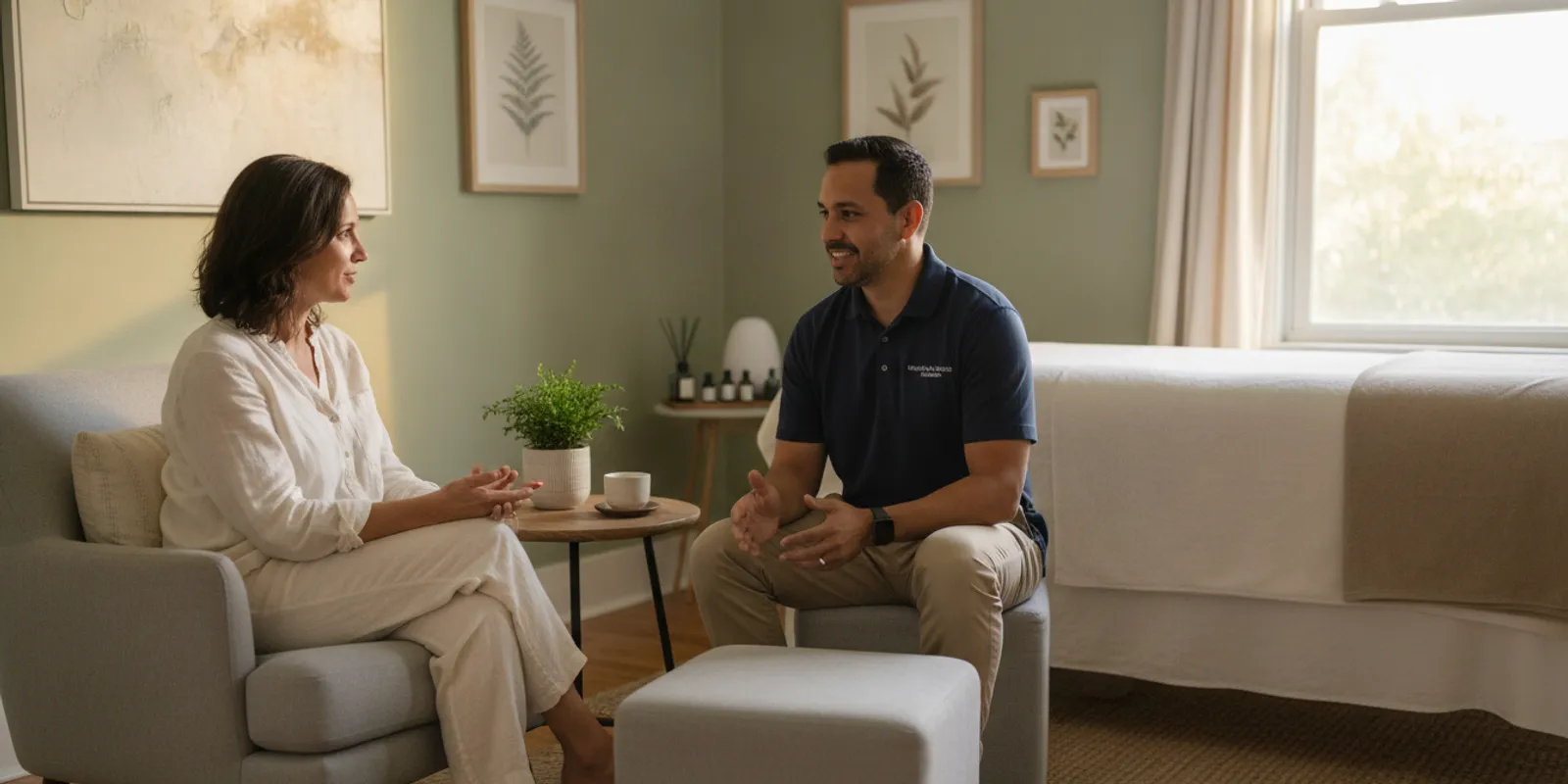
A thoughtful session begins with questions, not immediate deep pressure. Be ready to explain your training schedule, recent mileage or intensity changes, running surfaces, shoes, upcoming events, and the exact location and timing of your symptoms. Also mention previous injuries, medical conditions, medications, and any care you are already receiving.
Discuss the painful area and nearby muscles
The therapist may consider the calf, ankle, foot, and other surrounding tissues rather than treating the most tender spot aggressively. Depending on your symptoms and tolerance, the session may use slower work, lighter pressure, or a broader approach. You should be able to give feedback throughout the appointment.
Choose pressure based on the recovery stage
More pressure is not automatically better. If the lower leg is acutely irritated, aggressive work may be inappropriate. The right approach may be gentle and focused on comfort. If a clinician has cleared massage and the issue is mainly muscular tension, a therapist can discuss whether deeper work belongs in a later session.
Leave room for reassessment
Pay attention to how your leg responds during the session and over the next day. Increasing pain, new swelling, or a change in how you walk is a reason to pause and seek guidance. Relief during a massage does not prove that the original cause has been resolved.
Before booking, ask how the therapist can adapt the session to your goals and pressure tolerance. You can also review the studio’s sports massage guidance for active New Orleans clients before your appointment.
How should runners manage shin pain between sessions?
Recovery starts with respecting the activity that brought on the pain. If running causes symptoms, replace it temporarily with a lower-impact activity that does not reproduce the pain. Swimming, cycling, or water running may be options for some people, but your response matters more than following a fixed schedule.
- Reduce the painful load: Do not continue the same workout simply because you have a race on the calendar.
- Use cold carefully: A wrapped ice pack may help short-term comfort. Protect your skin and follow medical guidance if you have circulation or sensation concerns.
- Review training changes: Consider recent increases in mileage, hills, speed work, jumping, or running on harder surfaces.
- Check footwear and surfaces: Shoes that no longer feel supportive or a sudden change in terrain may be relevant to your discussion with a clinician.
- Return gradually: Resume running only when your symptoms allow it, and build back rather than restarting at your prior intensity.
The MedlinePlus self-care information for shin splints similarly emphasizes rest from painful activity, ice, and a gradual return. If your pain is not improving or continues to worsen, do not keep adding massage sessions without finding out why.
When is the best time to schedule massage around a run?
Timing depends on your goal and how hard you trained. A light session may be appropriate for relaxation or gentle mobility when your body feels stable. A demanding workout or race can leave tissues temporarily sensitive, so deep work immediately afterward may not be the best choice.
Runners often benefit from planning rather than booking the most intense treatment at the last minute. NOLA Bliss Massage’s guide to massage before or after a marathon explains why a pre-event session and a post-event recovery session may call for different pressure and timing. Its article on massage after a workout also discusses adjusting care to the intensity of the exercise.
If you have an upcoming race, tell the therapist the date before the session begins. Avoid trying a new, intense technique immediately before an event. If you are already sore, swollen, or limping, prioritize evaluation and recovery over race-day preparation.
Book a session and discuss your running goals with a NOLA Bliss Massage therapist.
How can New Orleans runners plan a more useful appointment?
New Orleans runners may be balancing humid weather, hard pavement, festival schedules, travel, and limited time before an event. A clear conversation can make your appointment more useful, whether you live near Downtown or are visiting for a race, convention, or weekend in the city.
- Bring the date of your last run and the workout that first caused symptoms.
- Describe whether the discomfort is on one side or both and whether it changes with walking.
- Share any diagnosis, imaging, physical therapy plan, or restrictions from your clinician.
- Tell the therapist whether your goal is relaxation, surrounding muscle comfort, recovery support, or preparation for a return to training.
- Ask what pressure and techniques are appropriate for your current stage of recovery.
NOLA Bliss Massage is located in the Warehouse District of Downtown New Orleans, close to the Convention Center and major downtown hotels. The studio offers free parking information for clients and normally has same-day appointments, although availability can change. If you are visiting, leave enough time to notice how your body responds before returning to a demanding activity.
Some clients ask about deeper work for persistent tension. NOLA Bliss also offers Ashiatsu Deepfeet Bar Therapy, but a deeper modality is not automatically the right choice for an active or unexplained shin injury. Discuss your symptoms first so the therapist can help identify an appropriate approach within the scope of massage therapy.
Frequently asked questions about shin splints massage
Is massage good for shin splints?
Massage may support comfort in tight surrounding muscles, but it does not diagnose shin pain or repair a possible bone stress injury. Use it as complementary care after considering the cause of your symptoms and seeking evaluation when needed.
Should you massage directly over shin splints?
Avoid aggressive pressure over a painful or potentially injured bone. A therapist may work more gently or address surrounding muscles based on your symptoms, history, and any medical guidance you have received.
Can you run with shin splints?
Running through pain can prolong the problem or obscure a more serious condition. Reduce or pause the activity that causes symptoms, choose pain-free movement if appropriate, and return gradually when your symptoms and professional guidance support it.
How do you know if shin pain is a stress fracture?
You cannot reliably confirm that distinction through massage. Very localized pain, pain at rest or at night, worsening symptoms, or pain after a direct injury should be evaluated by a qualified medical professional. Imaging may be considered when another cause needs to be ruled out.
Can I book a massage if I am visiting New Orleans for a race?
You can ask about an appointment, but explain your race schedule and current symptoms before treatment. NOLA Bliss Massage serves local clients and visitors in Downtown New Orleans, and the therapist can discuss whether a gentle, recovery-focused session fits your situation.
Book your New Orleans massage appointment when you are ready to plan supportive recovery care.
Shin pain deserves attention, not a test of toughness. If your symptoms appear consistent with manageable muscle tension and you have no warning signs, a conversation with a licensed massage therapist may help you choose a comfortable next step. If the pain is severe, persistent, or unclear, get medical guidance first and bring that plan into any future massage appointment.