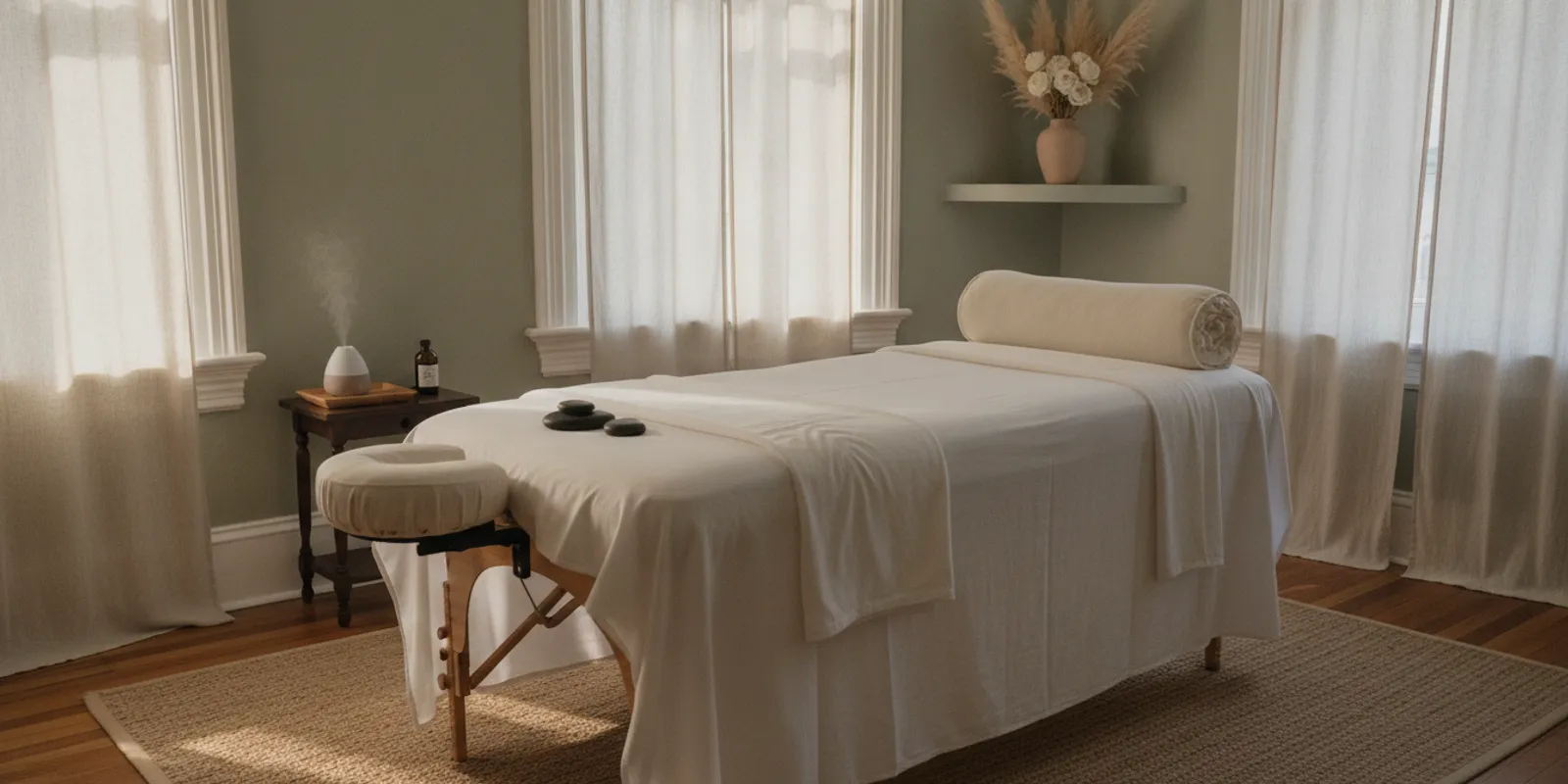

Arthritis can make an ordinary day feel less predictable: a familiar joint may feel stiff after travel, tender after activity, or difficult to position comfortably. Planning a professional massage starts with recognizing that arthritis is not one uniform condition. Your diagnosis, affected joints, current symptoms, medications, and treatment history all matter.
For some people, arthritis massage may offer short-term, drug-free comfort for pain and stiffness, but it is complementary care, not a cure or substitute for medical treatment. Ask your physician or rheumatologist whether massage is appropriate, especially during active inflammation, a flare-up, after a recent procedure, or when symptoms are uncertain. A licensed therapist can then adjust pressure, positioning, technique, and session goals to your tolerance.
That conversation is especially important when booking in New Orleans, whether you live nearby or are visiting Downtown, the French Quarter, or the Convention Center. The right session begins with a thoughtful intake and a clear understanding of what comfort means for you.
Book a massage appointment when you are ready to discuss your needs.
How Can Arthritis Massage Support Comfort?
Arthritis massage may support comfort by easing some muscle tension around affected areas and creating a more manageable starting point for movement. The goal is not to correct the underlying condition or replace medical care. It is complementary care that can be considered alongside guidance from a physician, rheumatologist, physical therapist, or other qualified clinician.
Research on massage for knee osteoarthritis suggests that benefits may include short-term changes in pain, stiffness, and function. A systematic review found significant reductions in pain and stiffness after one to four weeks of massage. It also reported reductions in stiffness and function scores after six to eight weeks. However, the review did not find a significant difference in outcomes with long-term therapy. Its authors noted limitations related to small study sizes and differences in study methods. These findings support realistic expectations, not a promise of lasting improvement. Read the review on PubMed.
Guidance summarized by the National Center for Complementary and Integrative Health is similarly measured. A 2020 review found a small improvement from massage or myofascial release for hip and knee osteoarthritis. Clinical guidelines conditionally recommend against massage therapy for knee and hand osteoarthritis. That apparent tension is important: evidence can vary by condition, outcome, treatment plan, and study quality. Massage may feel useful for some people, but it should not be presented as a universal arthritis treatment. Review the NCCIH evidence summary.
Arthritis Society Canada describes massage from a registered massage therapist as a possible short-term, drug-free way to soothe pain and stiffness and help maintain movement. Its guidance also notes that massage may decrease swelling and pain, improve joint mobility, and reduce muscle stiffness for some people with osteoarthritis. These are possible comfort goals, not guaranteed outcomes, and the appropriate approach depends on the type of arthritis, the joints involved, current symptoms, and your tolerance for pressure. See Arthritis Society Canada’s massage guidance.
A focused intake helps keep the session individualized. Share your diagnosis, affected joints, current pain level, medications, recent procedures, skin changes, and any medical restrictions. Discuss pressure and positioning before the massage, then speak up if a technique feels uncomfortable. For broader context on how therapeutic massage may fit into pain-management conversations, explore this guide to medical massage for pain relief. A therapist can help plan comfort-focused care, but a clinician should guide questions about medical appropriateness.
What Type of Massage Is Best for Arthritis Massage Goals?
There is no single best massage for every person with arthritis. Osteoarthritis, rheumatoid arthritis, and gout have different underlying patterns, and the same diagnosis can affect different joints with different symptoms. Your therapist should consider the affected area, current pain and sensitivity, movement limits, personal goals, and how much pressure you comfortably tolerate. Technique choice should support a thoughtful conversation, not replace guidance from your physician or rheumatologist.
At NOLA Bliss Massage, treatment planning includes adjusting pressure to your tolerance and selecting techniques for specific needs. A gentler approach may be appropriate when the goal is relaxation or easing surrounding muscle tension. A more focused approach may be discussed when a therapist is working around persistent muscular tightness, but deeper pressure is not automatically better for an arthritic joint. If symptoms are active, unusually intense, or medically uncertain, ask your healthcare professional whether massage is appropriate before scheduling.
| Approach to discuss | Why it may fit a comfort goal | What to clarify |
|---|---|---|
| Adaptable Swedish massage | Light-to-medium pressure can be adjusted for a calmer session and for areas that do not tolerate firm contact. | Which areas should receive lighter pressure, and how will you signal if the intensity needs to change? See these gentle Swedish massage techniques. |
| Customized deep tissue massage | Customized pressure may address surrounding muscle tension when that fits your goals and tolerance. | Can the therapist work around, rather than forcefully over, a sensitive joint? Review the available professional massage services before your appointment. |
| Therapist consultation | An intake conversation can help match session length, positioning, and technique to your symptoms and priorities. | Ask whether a myofascial approach or another technique is available and what modifications may be sensible. You can learn more about myofascial massage benefits. |
Use the table as a starting point for questions, not as a self-prescription. Share your diagnosis, affected joints, current pain level, medications, recent procedures, skin changes, and any medical restrictions during intake. A well-planned arthritis massage should remain collaborative, with permission to reduce pressure, change positioning, pause, or stop whenever the session no longer feels appropriate.
When Should You Postpone Massage or Ask a Clinician?
Massage can be complementary comfort care, but it is not a diagnosis, cure, or substitute for treatment prescribed by a physician, rheumatologist, or physical therapist. If you are unsure what is causing your symptoms, pause before booking and ask a qualified clinician whether massage is appropriate for your form of arthritis. Arthritis is not one condition, and a technique that feels comfortable for one person may be unsuitable for another.
Medical guidance is especially important during an active rheumatoid arthritis flare-up. Arthritis Society Canada advises avoiding massage on affected joints during an RA flare-up. Pain, warmth, swelling, or tenderness may change how a joint should be handled, so do not assume that more pressure or direct work will be helpful. A clinician can help you decide whether to wait, modify the plan, or avoid the area altogether.
You should also check with your physician or rheumatologist after a recent procedure. Do the same when a new symptom has not been evaluated, or when medications and medical restrictions may affect session planning. During intake, tell the therapist about your diagnosis, affected joints, current pain level, medications, recent procedures, skin changes, and any restrictions provided by your care team. This information supports a more careful conversation, but it does not replace medical clearance when clearance is needed.
What if your symptoms change during the appointment?
Speak up immediately if the pressure feels sharp, the position creates strain, a joint becomes more painful, or you notice a symptom that concerns you. You can ask for lighter pressure, a different position, more support, or a pause. A professional session should be collaborative, and you never need to tolerate discomfort to make the appointment worthwhile.
If symptoms are rapidly worsening or feel medically urgent, contact the appropriate healthcare service rather than trying to manage the problem with massage. When the situation is stable and your clinician agrees that massage is reasonable, share any updated guidance with the therapist before work begins. The session can then be adjusted to your current needs.
What Should You Share During Intake?
A useful intake gives the therapist enough context to plan complementary comfort care around your symptoms, tolerance, and goals. For a first appointment, arriving about 15 minutes early may allow time to complete a health history form and discuss it before hands-on work begins. The conversation may include your medical history, prescriptions, specific pain points, and a gentle range-of-motion discussion. It is not a diagnosis, and general preparation suggestions do not replace guidance from your physician or rheumatologist.
Before the session, think through the following details and share what feels relevant:
- Diagnosis and arthritis type: Share the diagnosis if you have one, such as osteoarthritis or rheumatoid arthritis. If the cause of your symptoms is uncertain, say so rather than asking massage to identify it.
- Affected joints: Identify the joints that feel painful, stiff, swollen, or limited. If your knees are the main concern, you can also review this guide to massage for knee pain before your appointment.
- Current pain level: Describe where you are today, what movements aggravate the discomfort, and whether symptoms are stable or changing. Mention an active flare-up clearly.
- Medications and recent procedures: Bring up prescriptions, injections, surgery, or other recent procedures. Medication questions and post-procedure restrictions belong with your healthcare professional as well as in the intake conversation.
- Skin changes and restrictions: Point out rashes, bruising, wounds, unusual warmth, or sensitive areas. Disclose medical restrictions, precautions, or anything your clinician has told you to avoid.
- Goals for the visit: Explain whether you want help with general relaxation, surrounding muscle tension, comfortable movement, or a particular area. Massage is complementary care, not a cure or replacement for prescribed treatment.
- Preferred pressure: Tell the therapist what pressure feels comfortable and what has felt too intense in the past. Pressure should be adjusted to your tolerance, and you can request a change at any point.
- Positioning and session length: Discuss pillows, bolsters, side-lying, or other positioning needs, along with a session length that fits your energy and goals.
- When to pause: Ask what sensations should prompt an immediate pause and when you should postpone the session or seek medical guidance. Speak up during the massage if pain, numbness, dizziness, or discomfort develops.
Privacy and draping should also be part of the conversation. Professional massage typically exposes only the area being worked, while the rest of the body remains covered. Ask for clarification before the session if you have questions about changing clothes, positioning, or which areas will be addressed. Clear communication helps create a plan that respects your comfort without presenting the appointment as a medical protocol specific to NOLA Bliss.
How Do You Plan an Arthritis Massage Session in New Orleans?
Planning an arthritis massage in New Orleans starts with choosing a setting where your concerns can be discussed openly and the session can be adjusted to your comfort level. NOLA Bliss Massage is a therapeutic studio in the Warehouse District of Downtown New Orleans, with a focus on professional treatment goals rather than spa amenities. That makes it a practical option for residents, downtown professionals, and visitors who want to talk through a customized session.
Before booking, consider the location and your schedule. The studio is within walking distance of the French Quarter, adjacent to the Convention Center, and near major downtown hotels. It also offers free parking, which can make arrival simpler for local clients, hotel guests, and convention attendees. If you are walking from a busy day of sightseeing or meetings, allow enough time to arrive calmly rather than treating the appointment as another rushed stop.
What should you confirm before booking?
NOLA Bliss uses an appointment-only model and normally offers same-day appointments, although availability can vary. You can review the studio’s professional massage services and use the booking page to request a time. When you contact the studio, mention that arthritis affects your planning. Share the joints involved, your current comfort level, and whether a clinician has given you any restrictions or recommendations.
All NOLA Bliss therapists are fully licensed in Louisiana, and the team averages more than 10 years of experience. During the intake conversation, ask how pressure, positioning, technique, and session length can be adapted to your tolerance. Deep tissue work is not automatically the right choice for every person or every day. A lighter approach, more focused work around surrounding muscles, or a different position may be more appropriate depending on your symptoms and goals.
How can residents and visitors prepare?
Bring an accurate list of medications, recent procedures, skin changes, and relevant medical restrictions. If you have active inflammation, an uncertain symptom, or questions about whether massage is appropriate for your form of arthritis, check with your physician or rheumatologist before scheduling. Massage is complementary comfort care, not a diagnosis, cure, or replacement for prescribed treatment. Clear information gives the therapist a better basis for planning and helps you speak up if pressure or positioning does not feel right during the session.
What Questions Should You Ask Before the Session?
A productive conversation helps turn a general appointment into a more comfortable, individualized plan. Before booking, ask whether the therapist has experience working with clients who need comfort-focused care. Ask how they adapt a session when a joint or surrounding area is sensitive. NOLA Bliss treatment planning includes selecting techniques for specific needs and adjusting pressure to the client’s tolerance. The goal is not to choose the most intense approach by default.
Useful questions include:
- How will you modify pressure? Ask how the therapist will distinguish therapeutic contact from pressure that feels sharp, aggravating, or simply too much. You can request lighter work, gradual changes, or less direct attention around a tender joint.
- What positioning or support can I use? Ask whether bolsters, pillows, side-lying, or another position can reduce strain. Comfort is part of the plan, not an inconvenience to tolerate.
- How long should the first session be? Session length can be matched to your goals, tolerance, and the number of areas you want to address. Ask what is realistic for an initial visit rather than assuming longer is always better.
- What should make me ask you to pause or change direction? Agree that you will speak up about sharp pain, increasing discomfort, numbness, dizziness, or a position that does not feel stable. Ask how the therapist wants you to communicate during the work.
- How can we adjust the plan during the session? A plan should remain responsive. Tell the therapist if a technique feels helpful, neutral, or irritating, and ask what alternatives are available if your tolerance changes.
Also explain your affected joints, current symptoms, medications, recent procedures, skin changes, and any medical restrictions. If you are unsure whether massage is appropriate for your form of arthritis, ask your physician or rheumatologist before scheduling. Massage is complementary comfort care, not a diagnosis or cure. If you want broader context before speaking with a therapist, review the massage benefits for your body alongside your own healthcare guidance.
Book a massage appointment and discuss your comfort goals with the NOLA Bliss team before your session.
Frequently Asked Questions
What type of massage is best for arthritis?
There is no single best approach for every person or joint. A therapist should consider your arthritis type, affected area, current symptoms, pressure tolerance, positioning needs, and goals. Gentle Swedish techniques or carefully adjusted therapeutic work may be discussed, while deeper pressure may not be appropriate during tenderness or active inflammation.
Is it okay to get a massage with arthritis?
Massage may be reasonable as complementary comfort care, but first check that it is appropriate for your situation. Share your diagnosis, affected joints, pain level, medications, recent procedures, skin changes, and medical restrictions. Ask your physician or rheumatologist before booking if you have questions, an active flare-up, or uncertain symptoms. Avoid massage on affected joints during a rheumatoid arthritis flare-up, as advised by Arthritis Society Canada: read its safety guidance.
What is the fastest way to relieve arthritis pain?
There is no universally fastest method, and massage should not be presented as an immediate cure. Research on knee osteoarthritis suggests possible short-term improvements in pain and stiffness, but results vary and long-term benefits remain uncertain: review the evidence. Follow your established medical plan and ask a clinician about new or worsening pain.
Should I postpone a session during an arthritis flare-up?
Yes, pause and seek medical guidance when symptoms are unusually severe, an affected joint is actively inflamed, or you are unsure whether massage is safe. Contact your physician or rheumatologist about the timing of care. If you proceed after receiving guidance, tell the therapist exactly what changed so pressure, positioning, and the session plan can be adjusted.
What should I ask before an arthritis massage?
Ask how the therapist will modify pressure, support the affected area, position you comfortably, choose session length, and respond if discomfort increases. Also ask when they would recommend postponing or seeking medical guidance. During the appointment, speak up promptly if pressure, temperature, movement, or positioning does not feel right.
Book Your Arthritis Massage in New Orleans
A thoughtful session starts with a conversation about your comfort, mobility, pressure preferences, and any guidance from your healthcare team. If massage appears appropriate for your needs, book a professional massage appointment with NOLA Bliss Massage to discuss comfort-focused session planning. Share your goals during booking so the visit can begin with clear expectations and a personalized approach.