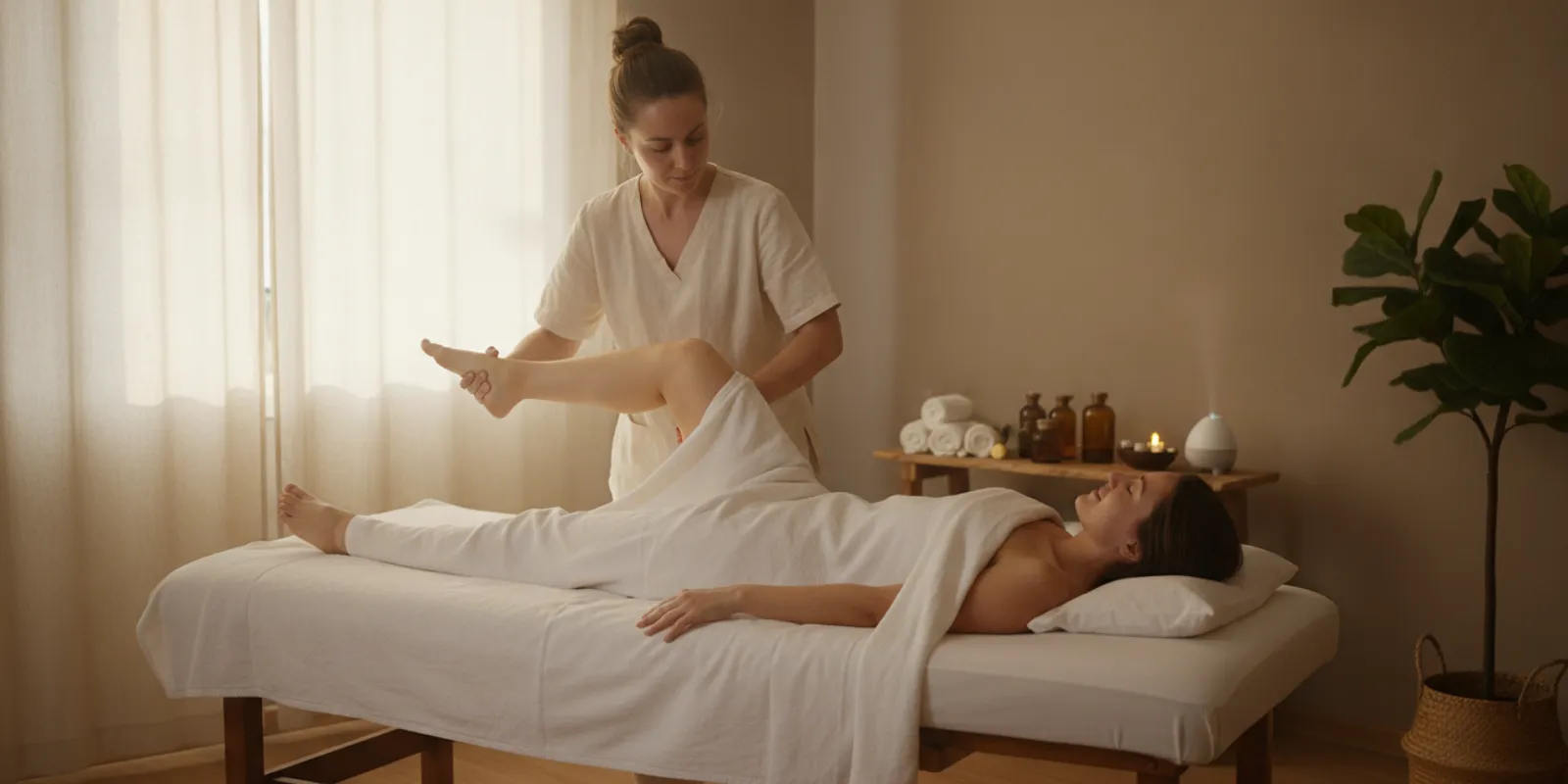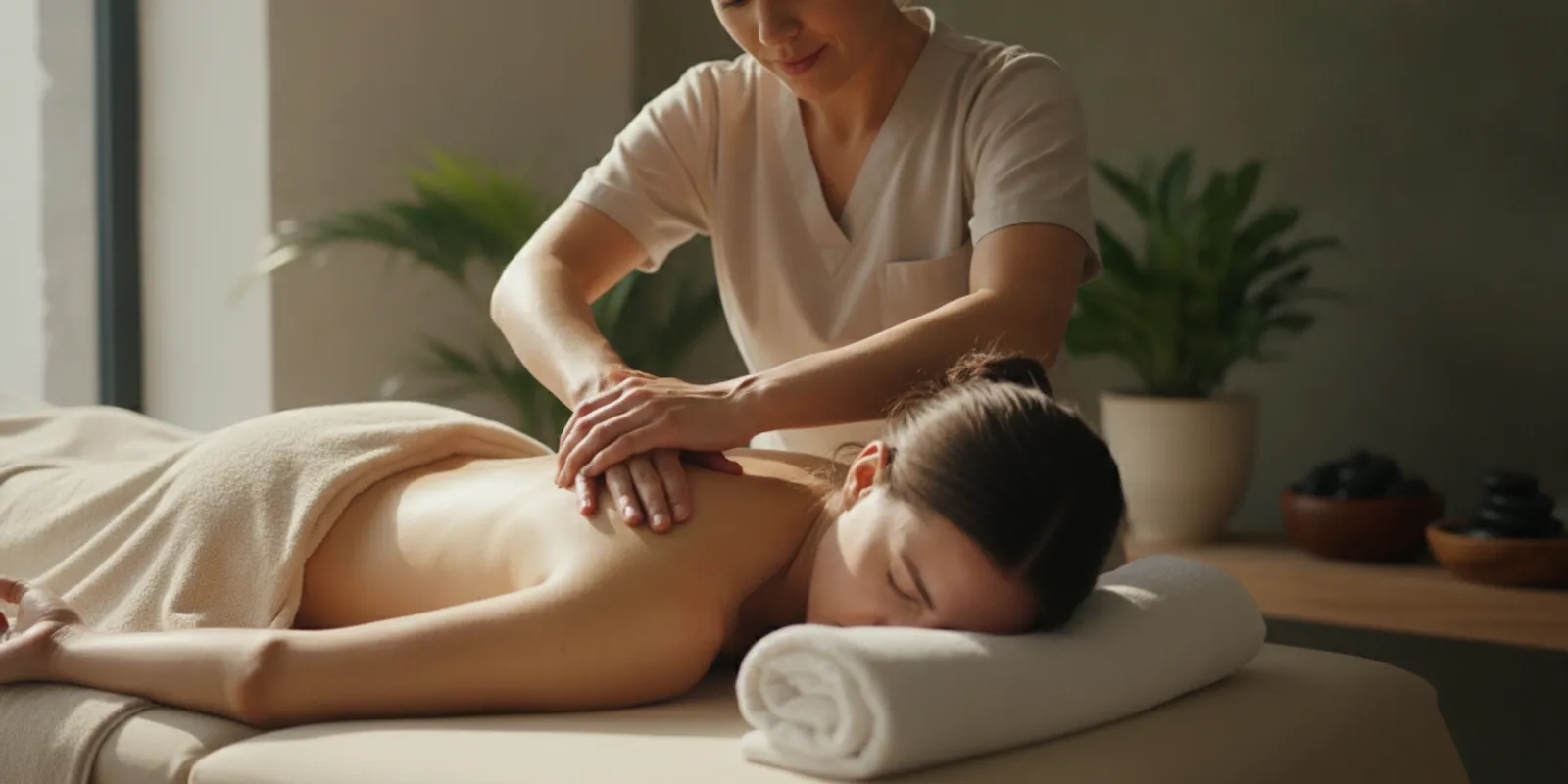

Knee discomfort can make a simple walk, stair climb, or workout feel harder than it should. If you are considering massage for knee pain, the most important question is not whether the pressure will be deep. It is whether massage is appropriate for what you are feeling, and how a therapist can work around the knee without aggravating it.
Book your massage appointment online and share your knee concerns during the intake so your therapist can plan a comfortable session.
Massage may be useful when tight muscles in the thigh, hip, calf, or hamstrings contribute to a dull ache or restricted movement. It is not a way to diagnose a ligament tear, fracture, infection, or other medical condition. This guide explains what to consider before booking, what to tell your therapist, and when postponing massage is the safer choice.
Can massage help with knee pain?
Massage can sometimes ease knee discomfort when surrounding muscle tension contributes to stiffness or limited movement. A therapist may work on the quadriceps, hamstrings, calves, glutes, and hips instead of pressing directly on the joint. Massage is complementary care, not a diagnosis or replacement for evaluation when symptoms are severe, new, or worsening.
The knee does not work alone. Muscles and connective tissues above and below it help control how the joint moves and absorbs load. If those tissues are tense after travel, repetitive activity, prolonged sitting, or a change in exercise, thoughtful massage may help you feel less restricted. The goal is not to force the knee into a stretch or prove that you can tolerate intense pressure.
Research on massage for knee osteoarthritis has found short-term improvements in pain, stiffness, and function after a course of weekly massage, but one study does not mean massage is right for every person or every cause of knee pain. The randomized clinical trial published in the Journal of General Internal Medicine studied adults with diagnosed osteoarthritis under a defined treatment protocol. Your own symptoms and medical history still determine the appropriate next step.
What could be causing your knee discomfort?
Knee pain has many possible causes, and the sensation alone cannot identify which one you have. A mild ache after activity may have a different explanation from sudden swelling after a twist. Before booking, note when the pain started, what makes it better or worse, and whether you can walk and move the knee normally.
| What you notice | Why it matters before massage | Safer next step |
|---|---|---|
| Dull tightness after sitting, travel, or activity | Surrounding muscles may be contributing to the sensation | Share the pattern during intake and ask about a gentle, customized session |
| Soreness after a new workout without major swelling | Muscle fatigue and delayed soreness may need lighter work | Wait until normal movement feels comfortable, then discuss pressure options |
| Pain after a fall, twist, impact, or audible pop | A joint, ligament, tendon, or bone injury may need evaluation | Seek medical guidance before scheduling massage |
| Heat, redness, marked swelling, or fever | These can signal inflammation, infection, or another condition massage cannot assess | Postpone massage and contact a healthcare professional promptly |
| Locking, giving way, or inability to bear weight | Reduced stability or movement needs assessment | Do not use massage as the first response |
These categories are not a diagnosis. They are a booking screen. If you are uncertain, a medical professional can help determine whether massage, physical therapy, rest, imaging, or another form of care belongs in your plan.
When should you postpone massage and seek medical care?
Postpone massage if knee pain followed a significant injury, is rapidly worsening, or comes with severe swelling, warmth, redness, fever, deformity, locking, or an inability to bear weight. These symptoms may require medical assessment before bodywork. Massage therapists can adapt a session, but they should not diagnose or treat an unassessed acute injury.
- You cannot put weight on the leg or the knee gives way.
- The knee is badly swollen, visibly deformed, hot, or red.
- You have a fever or feel generally ill along with knee pain.
- You heard a pop during an injury or have intense pain after a fall or collision.
- The knee locks, will not straighten, or you cannot move it normally.
- Pain is persistent, worsening, or interfering with sleep and daily activities.
For a plain-language overview of symptoms that warrant a call to a clinician, see the Mayo Clinic guidance on knee pain symptoms and causes. If you have already been evaluated, follow your healthcare provider’s restrictions and tell your massage therapist about them before the session.
How will a therapist adjust a knee-pain massage?
A knee-focused session should be collaborative. Your therapist may use the intake to decide whether to work directly near the knee, focus on surrounding muscles, change your position, reduce pressure, or avoid the area altogether. You should be able to give feedback at any time, and sharp or escalating pain is a reason to stop and reassess.
1. Start with questions, not pressure
Expect questions about the onset of symptoms, recent injuries, surgeries, diagnoses, medications, activity, swelling, and your goal for the session. Be direct about what you can and cannot do comfortably. If a provider has given you a care plan, bring those instructions into the conversation.
2. Work around the joint when appropriate
Depending on the situation, a therapist may focus on the quadriceps, hamstrings, calf muscles, glutes, hips, or lower leg. The intent is to reduce unnecessary tension in tissues that influence movement, not to force a painful joint or press hard on the kneecap. The American Massage Therapy Association’s knee self-massage resource also emphasizes the role of surrounding tissues and the need for appropriate caution.
3. Adjust pressure and positioning
Light or moderate pressure may be more appropriate than deep work when the area is tender, recently overused, or easily irritated. Pillows, side-lying, supine, or prone positioning may be used to keep the knee supported. Pressure should feel productive and manageable, not like something you must endure to get results.
4. Check your response during and after the session
Tell your therapist if pain changes from a dull ache to a sharp, electric, burning, or unstable sensation. Also report numbness, tingling, dizziness, or any concern that the position is stressing the joint. A therapist may change techniques or end work in that area. Afterward, notice how you move over the next day rather than judging the session only by how intense it felt.
NOLA Bliss Massage’s massage services are delivered by licensed massage therapists who can discuss your goals and customize pressure. If your knee issue is part of a broader pattern of muscle tension, a session may include related areas rather than treating the knee in isolation.
Which massage approach may fit your goals?
The best massage approach depends on your symptoms, tolerance, and reason for booking. A therapist may blend methods rather than follow a fixed routine. The name of the massage is less important than a clear intake, appropriate pressure, and a plan that respects any medical restrictions.
- Swedish massage: A lighter, flowing option that may suit general relaxation, stress, or mild muscle tightness.
- Deep tissue massage: Targeted work that can address persistent muscle tension when deeper pressure is appropriate and comfortable.
- Therapeutic massage: Goal-oriented work that adapts the session to a specific movement or discomfort concern.
- Ashiatsu Deepfeet Bar Therapy: A specialized technique that can provide broad, sustained pressure, but it is not automatically appropriate over or around a painful knee. Ask the therapist to assess fit first.
Learn more about how NOLA Bliss approaches therapeutic massage in New Orleans, or compare the focus of deep tissue massage in New Orleans before choosing a service. You can also review the difference between productive pressure and excessive discomfort in Does Deep Tissue Massage Hurt?.
What questions should you ask before booking?
Before booking, ask how the studio handles a new or sensitive area, what information the therapist needs, and whether the session can be modified if your symptoms change. A clear conversation helps you choose a service without assuming that the most intense technique is the most therapeutic.
- Can I discuss my knee symptoms and movement limits during intake?
- Can the therapist avoid direct pressure on the knee joint or kneecap?
- What should I do if a technique creates sharp pain or instability?
- Should I bring instructions from a doctor or physical therapist?
- Can the session address related hip, thigh, or calf tension as appropriate?
NOLA Bliss Massage is appointment-only, so share the relevant details when you book rather than waiting until the therapist begins. If you are visiting Downtown New Orleans, the studio also offers free parking information to make planning easier. For additional background on targeted work, see the trigger point massage guide and the guide to massage for muscle tension.
What should you expect before, during, and after booking?
Knowing what to share and what to expect can make the appointment more useful. The purpose of the first conversation is not to test how much pain you can tolerate. It is to give your therapist enough information to make a safe, comfortable decision about the session.
- Before booking: Write down when the pain began, what caused it if known, and whether you have swelling, instability, or limited movement.
- At intake: Mention diagnoses, recent procedures, medications that affect bleeding or sensation, pregnancy, and any instructions from your healthcare provider.
- During the session: Agree on a pressure range and speak up early. You never need to wait until a sensation becomes intense to request a change.
- After the session: Move gently, hydrate normally, and observe your response. Contact a medical professional if symptoms become severe, unusual, or progressively worse.
Do not schedule a session simply because you hope massage will prove that a problem is minor. Book when the situation is appropriate for massage and you understand the purpose of the appointment. For a broader look at pain-focused bodywork, you can also read NOLA Bliss Massage’s guide to medical massage for pain.
Book your massage appointment online when your symptoms are appropriate for massage, and include a note about your knee concerns so the team can prepare for the intake.
Frequently asked questions about massage for knee pain
Is massage safe for knee pain?
Massage may be appropriate for some types of mild or persistent knee discomfort, especially when surrounding muscle tension is part of the problem. Safety depends on the cause, symptoms, medical history, and therapist’s screening. Severe pain, swelling, heat, redness, instability, or a recent significant injury should be evaluated before massage.
Where should a therapist massage for knee pain?
A therapist may work on the quadriceps, hamstrings, calf, glutes, hips, or other surrounding soft tissue rather than pressing directly on the kneecap or joint. The exact area depends on your symptoms and tolerance. Your therapist should explain the plan and adjust it if any technique increases pain.
Can deep tissue massage make knee pain worse?
It can if pressure is too intense for the condition or is applied to an area that needs evaluation. Deep pressure is not automatically better. Tell your therapist about tenderness, injury, swelling, and pain quality so they can choose a lighter approach or postpone work around the knee.
Should I get a massage after a knee injury?
Ask a healthcare professional first if the pain followed a fall, twist, collision, pop, surgery, or other significant injury. A massage therapist cannot confirm whether a ligament, tendon, cartilage, or bone is injured. Once you have appropriate clearance and instructions, share them during your massage intake.
How should I prepare for a knee-pain massage?
Bring a clear description of when the pain began, what movements affect it, and any diagnoses or treatment instructions. Wear comfortable clothing, arrive ready to discuss pressure, and plan to give feedback throughout the session. If symptoms have changed or worsened since booking, contact the studio before arriving.
Book your massage appointment online to discuss your goals with the NOLA Bliss Massage team and decide whether a customized session is the right next step.