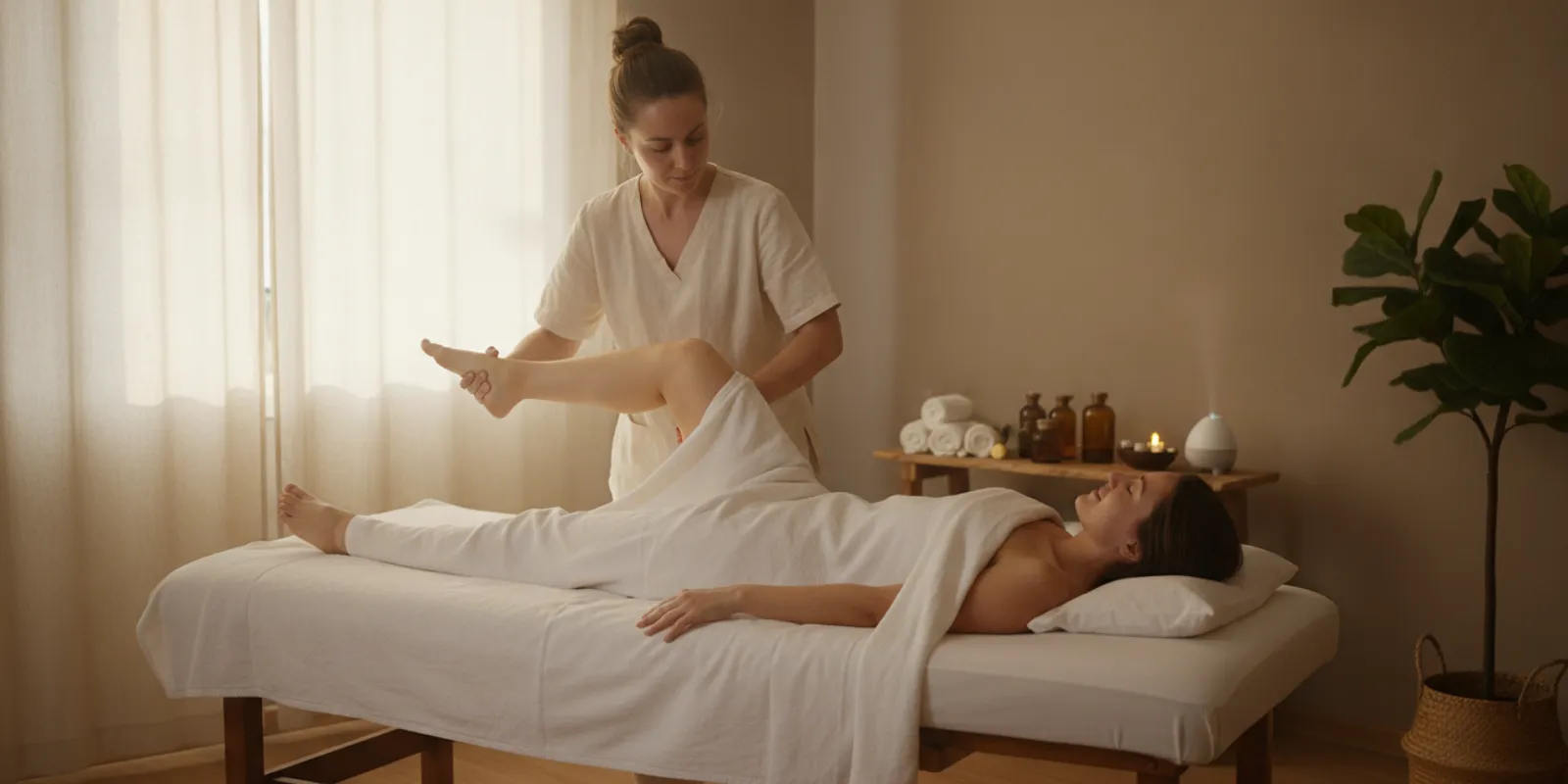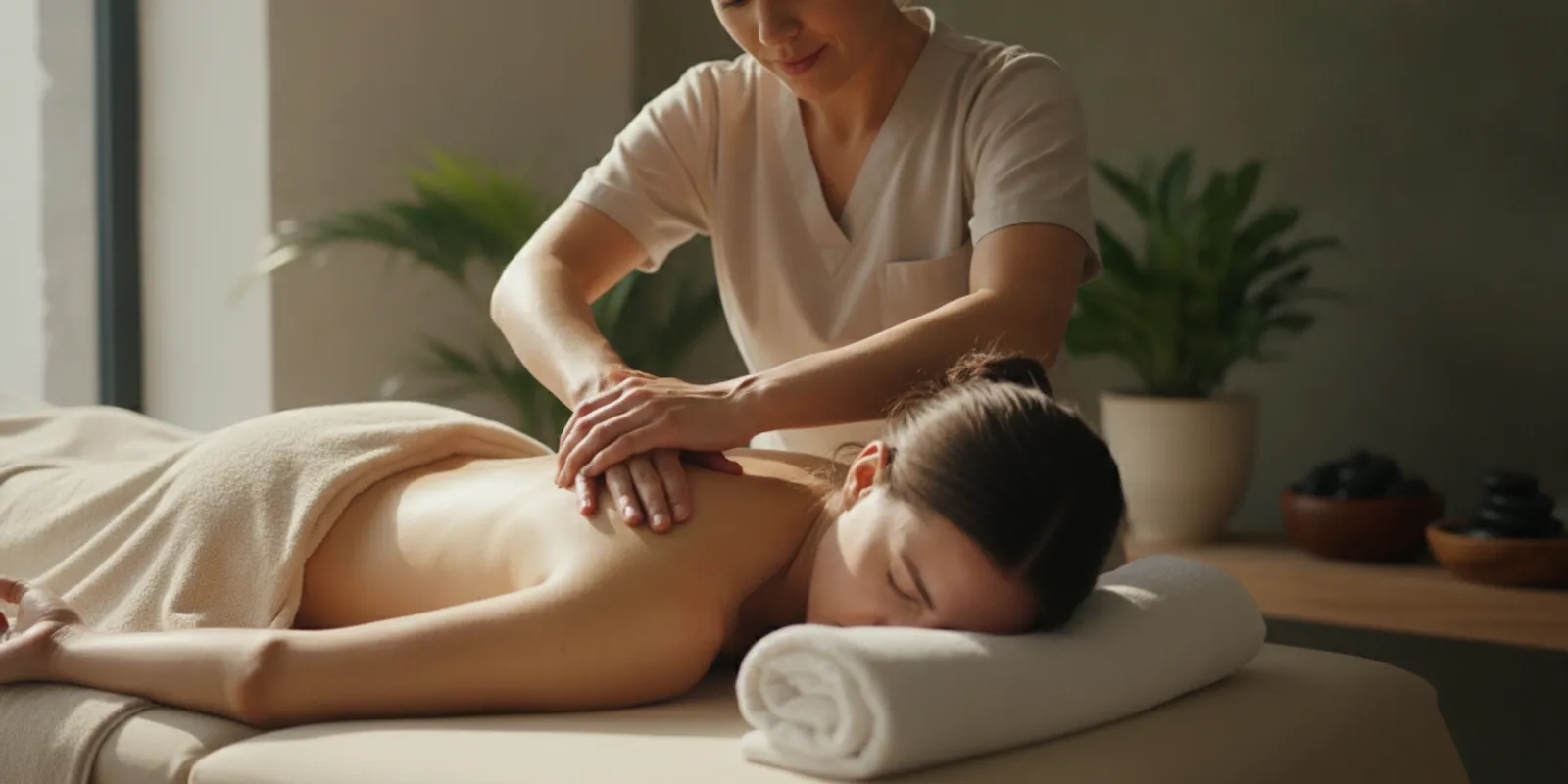

If you are searching for massage for TMJ, you may feel tight jaw muscles, facial tension, or headaches. That discomfort can also travel into your neck and shoulders. Gentle, external massage may help relax some of the muscles involved in jaw tension. It is not a diagnosis or a cure for a temporomandibular disorder. A dentist or qualified clinician should evaluate persistent, severe, or limiting symptoms.
Explore therapeutic massage services
This guide explains where massage may fit, what a careful session can look like, and when professional dental or medical care should come first. It is educational information, not individualized medical advice.
What does TMJ mean, and can massage help?
Short answer: TMJ is the temporomandibular joint. TMD describes disorders affecting the jaw joints and the muscles that control movement. Massage may ease muscle-related tension around the jaw, temples, face, neck, and shoulders. That relief is possible for some people. It cannot confirm the cause of pain or repair a joint, disc, bite, or dental problem.
The terms TMJ and TMD are often used interchangeably, but they are not exactly the same. The National Institute of Dental and Craniofacial Research explains that TMDs involve the jaw joints and the muscles used for jaw movement. Some symptoms are linked mainly to muscle tension. Others may involve the joint, cartilage, disc, arthritis, or an injury. Tooth-related problems, or more than one factor, can also be involved.
That distinction matters when you are deciding whether to book a massage. A massage therapist can work with external soft tissue and adjust pressure to your comfort. A dentist, physician, or orofacial pain specialist is the right person to assess the joint, teeth, bite, or inflammation. They can also check for other medical causes. Massage can be complementary care for appropriate clients, not a substitute for evaluation.
Which TMJ symptoms may be related to muscle tension?
Short answer: Muscle-related jaw tension may feel like soreness in the cheeks, temples, or jaw muscles. It can also feel like fatigue while chewing, tightness after clenching, or tension that extends into the neck and shoulders. These symptoms can overlap with dental and joint conditions, so new or persistent pain should not be self-diagnosed.
People often notice jaw tension alongside habits that keep muscles active. Those habits include clenching during concentration, grinding at night, long screen time, stress, or holding the head forward. Related discomfort may include:
- Achiness in the cheek or temple muscles.
- Tenderness along the jaw or upper neck.
- Head or neck tension that appears with jaw tightness.
- Fatigue or soreness after chewing.
- A feeling that the face, shoulders, or scalp are holding tension.
These signs do not identify the source by themselves. Clicking or popping without pain can be common. Painful clicking, locking, restricted movement, or a change in how the teeth fit together deserves professional attention. If discomfort interferes with eating, speaking, sleeping, or opening the mouth, schedule an evaluation. Do not ask massage to be the only plan.
How might massage ease jaw and facial tension?
Short answer: A careful massage session may reduce the feeling of muscular tightness. It uses comfortable, gradual pressure on the jaw area and connected regions such as the neck, shoulders, upper back, scalp, and temples. The goal is relaxation and soft-tissue comfort, not forceful movement of the jaw joint.
Jaw muscles do not work in isolation. Muscles around the neck, shoulders, scalp, and upper back can add to how tension feels around the head and face. A therapist may begin away from the jaw, then gradually work toward areas that feel comfortable. External techniques can include gentle contact at the temples, scalp, upper neck, shoulders, and the cheek muscles beside the jaw.
Pressure should be light to moderate and guided by your feedback. A therapeutic session should not force the mouth open. It also should not press hard over a painful joint or try to make a click or pop happen. Massage inside the mouth is outside the scope of this general guide and should never be attempted as a DIY technique.
Research on manual therapy for TMD has examined several approaches, often as part of physical therapy and exercise programs. Reviews suggest that some people may see improvements in pain or function. That evidence is not a reason to promise that massage will work for every cause of jaw pain. Your therapist should communicate with you about comfort and stop or change the approach if symptoms worsen.
What should you tell a massage therapist before a session?
Short answer: Tell the therapist where you feel pain, how long it has been present, and what movements aggravate it. Also say whether a dentist or clinician has evaluated you. Also describe clenching, headaches, recent dental work, injury, and jaw locking. Share your preferred pressure so the session can stay safe and comfortable.
Before treatment, be specific rather than simply asking for deep pressure. A useful intake conversation can cover:
- The location and quality of the discomfort, such as aching, tenderness, or sharp pain.
- Whether symptoms are on one side or both sides.
- Whether you have trouble opening or closing the mouth.
- Any recent dental work, facial injury, surgery, or diagnosed TMD.
- Whether headaches, neck pain, or shoulder tension occur at the same time.
- What pressure feels appropriate and what contact you do not want.
At NOLA Bliss Massage, the therapist can use this information to tailor a therapeutic massage rather than applying a one-size-fits-all routine. You can ask to begin with the neck, shoulders, upper back, or scalp. Then decide together whether external jaw work feels appropriate. You should be able to speak up at any time. A session should be adjusted or stopped if pain becomes sharp, intense, or unfamiliar.
Book your massage appointment online
When should you see a dentist or clinician before massage?
Short answer: Get a professional evaluation before relying on massage if jaw pain is constant, sudden, or worsening. Do the same if it comes with limited movement, locking, a recent injury, significant swelling, tooth pain, or difficulty chewing. A clinician can determine whether the problem is muscular, joint-related, or dental. It may also be part of another condition.
The NIDCR recommends consulting a dentist or doctor when you think you may have a TMD. Conservative care is often considered first, but the appropriate plan depends on the cause. Ask for an evaluation before massage if you have:
- A jaw that locks open or closed, or difficulty opening the mouth normally.
- Sudden or persistent jaw tenderness or pain.
- Painful clicking, grating, or a noticeable change in your bite.
- Recent trauma to the jaw, face, or neck.
- Unexplained facial swelling, severe tooth pain, or signs of a dental problem.
- Pain that is getting worse or affecting eating, speaking, or sleep.
Seek urgent medical care for a serious injury. Do the same for major swelling or trouble breathing or swallowing. When a dentist or clinician gives you a diagnosis or care plan, share that guidance with your massage therapist. Massage may be considered as supportive comfort only when it fits that plan.
How is massage different from dental care or physical therapy?
Short answer: Massage focuses on external soft-tissue comfort and relaxation. Dental or medical care evaluates teeth, bite, joint structure, injury, and other causes of pain. Physical therapy may address jaw movement, exercise, posture, and function. These services can have different roles. One should not be presented as a replacement for another.
| Type of care | Primary focus | When it may fit |
|---|---|---|
| Massage therapy. | External muscle and soft-tissue tension, relaxation, and comfort. | Muscle-related tightness when a clinician has ruled out concerns that need medical care, or as complementary care. |
| Dental or medical evaluation. | Teeth, bite, jaw joint, injury, inflammation, and diagnosis. | New, persistent, severe, or function-limiting symptoms. |
| Physical therapy. | Movement, exercises, posture, function, and a structured rehabilitation plan. | Restricted movement or a TMD plan that includes therapeutic exercise. |
If you are unsure which professional to contact, start with a dentist or primary clinician for persistent jaw symptoms. If your main concern is broader neck, shoulder, or facial muscle tension, and there are no warning signs, you can discuss whether massage is appropriate. NOLA Bliss Massage offers therapeutic massage services that can be tailored to your comfort and goals.
What can you do between appointments?
Short answer: Follow the plan provided by your dentist or clinician. In general, avoid habits that repeatedly strain the jaw, such as gum chewing or intentional clenching. Choose comfortable, low-force routines. Do not force stretches or repeatedly test a painful click. Do not use massage to push through worsening symptoms.
Simple awareness can help you notice when the jaw is braced. During the day, check whether your teeth are touching when you are not eating. Relaxing the shoulders and taking breaks from long screen posture may support comfort. So can the self-care steps your clinician recommends. The NIDCR discusses conservative approaches. Those include learning about your condition, reducing clenching and gum chewing, and using heat or cold with appropriate jaw exercises.
Do not copy an aggressive online technique just because it promises to release the TMJ. The joint is not a knot that needs to be forced into position. Stop any self-care activity that causes sharp pain, locking, numbness, dizziness, or a clear increase in symptoms. Then contact a qualified professional.
Can massage for TMJ relieve headaches and neck tension?
Short answer: Massage may help some people relax muscles tied to neck, shoulder, temple, or jaw tension. That tension can feel connected to certain tension-type headaches. It cannot tell whether a headache comes from TMD, migraine, medication overuse, infection, injury, or another condition. New or unusual headaches need appropriate medical evaluation.
Jaw tension and headache symptoms can overlap, but the relationship is not always simple. A massage therapist can ask about the pattern. They can work gently on related external areas if that is appropriate. For broader context, NOLA Bliss Massage also explains how massage may fit into care for headache-related muscle tension. That page also covers what to consider before booking.
Head, neck, and shoulder work may be a better starting point than direct jaw work for some clients. You can read about head, neck, and shoulder massage benefits and expectations before your visit. If headaches are severe, sudden, frequent, or changing, seek medical care. Do the same if they come with neurological symptoms. Do not try to massage them away.
How can you choose a massage approach for jaw tension?
Short answer: Choose the gentlest approach that matches your symptoms and comfort. A therapist may combine gentle work on the neck, shoulders, scalp, temples, and external jaw muscles. The jaw should not be treated as an isolated problem. The right approach should be explained and based on your consent. It should also be easy to change during the session.
Deep pressure is not automatically better for jaw tension. Some people prefer a lighter, slower session. That is especially true if the area is sensitive or symptoms are active. Others may benefit from a broader therapeutic massage that addresses upper-back and neck tension. Discuss the goal before the session. Agree that comfort, not intensity, is the measure of a useful visit.
Related education can help you compare options. NOLA Bliss Massage provides information about trigger point massage for focused muscle knots, trigger point therapy and pain relief, and what to expect from deep tissue massage. Those pages describe broader techniques. They are not a promise that any one method treats TMD. Your therapist can help you pick a comfortable starting point after hearing your history and goals.
For information about the studio’s available services and how sessions can be customized, visit the NOLA Bliss Massage services page. Visitors and local clients can also review free parking information before their appointment.
Frequently asked questions about massage for TMJ
Can massage cure TMJ?
No. Massage may ease muscle-related tension for some people. It does not diagnose or cure every cause of TMD. A dentist or clinician should evaluate persistent, severe, or function-limiting symptoms.
Is it safe to massage the jaw joint directly?
Do not press forcefully on a painful jaw joint or try to make it click. Ask a qualified massage therapist about gentle external work. Seek clinical guidance if the joint is painful, swollen, locked, or recently injured.
What areas are included in a massage for jaw tension?
A therapist may discuss the temples, scalp, cheeks, upper neck, shoulders, and upper back. They may also discuss any external jaw work that feels appropriate. The exact approach should follow your history, symptoms, consent, and comfort.
Should I get a massage before seeing a dentist?
If symptoms are new, persistent, or severe, contact a dentist or clinician first. Do the same if they affect movement, eating, or sleep. Massage may be considered later as complementary care. That is only if it fits the evaluation and care plan.
Can massage help TMJ headaches?
It may help relax some muscles tied to jaw, neck, temple, or shoulder tension. Not every headache is caused by TMD. Severe, sudden, changing, or unusual headaches need medical evaluation.
What should I avoid with TMJ pain?
Avoid forceful jaw manipulation and aggressive self-massage. Do not repeatedly test a painful click or push through worsening symptoms. Follow your clinician’s advice. Reduce habits such as clenching or gum chewing when appropriate.
Book your massage appointment online to discuss a comfortable, goal-focused therapeutic massage at NOLA Bliss Massage.
Health note: This article is for general education and does not replace evaluation or treatment from a dentist, physician, physical therapist, or other qualified healthcare professional.
Sources: National Institute of Dental and Craniofacial Research, TMD; Life, The Efficacy of Manual Therapy Approaches on Pain, Maximum Mouth Opening and Disability in Temporomandibular Disorders.