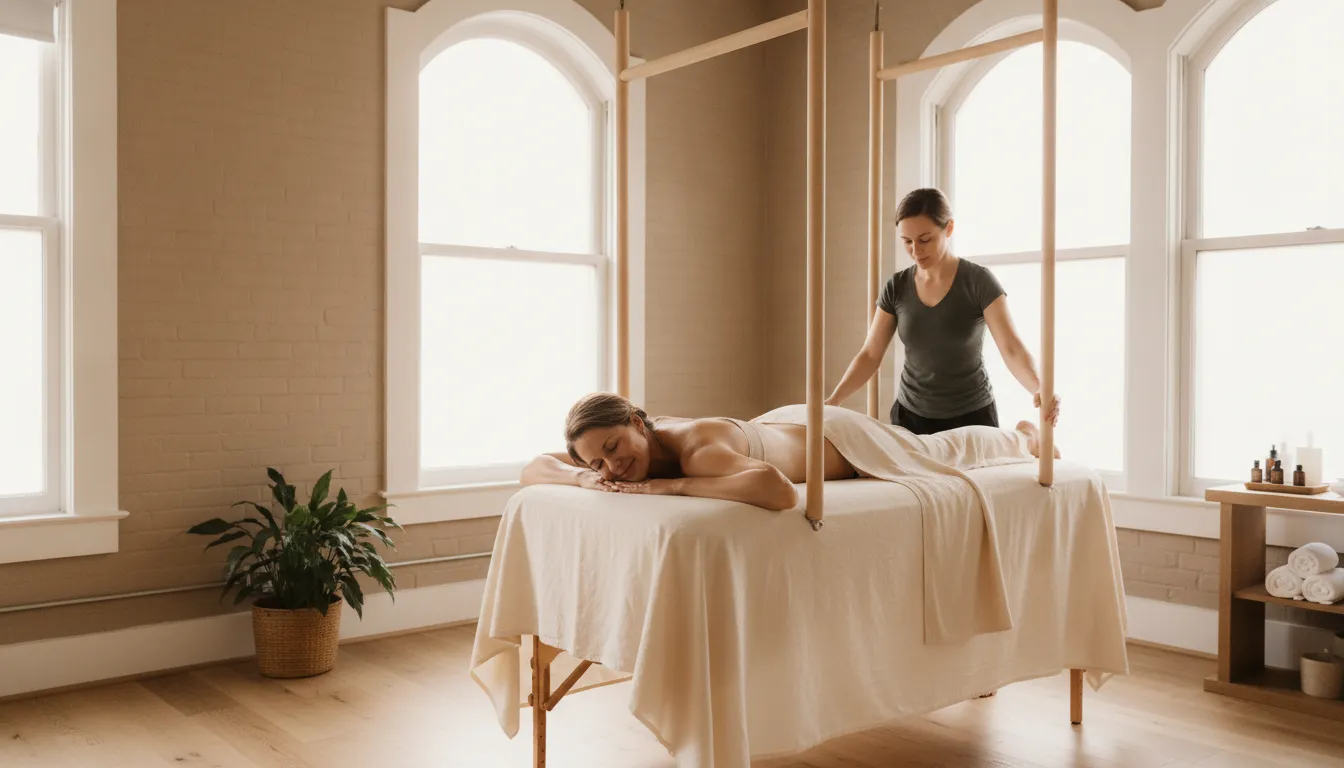
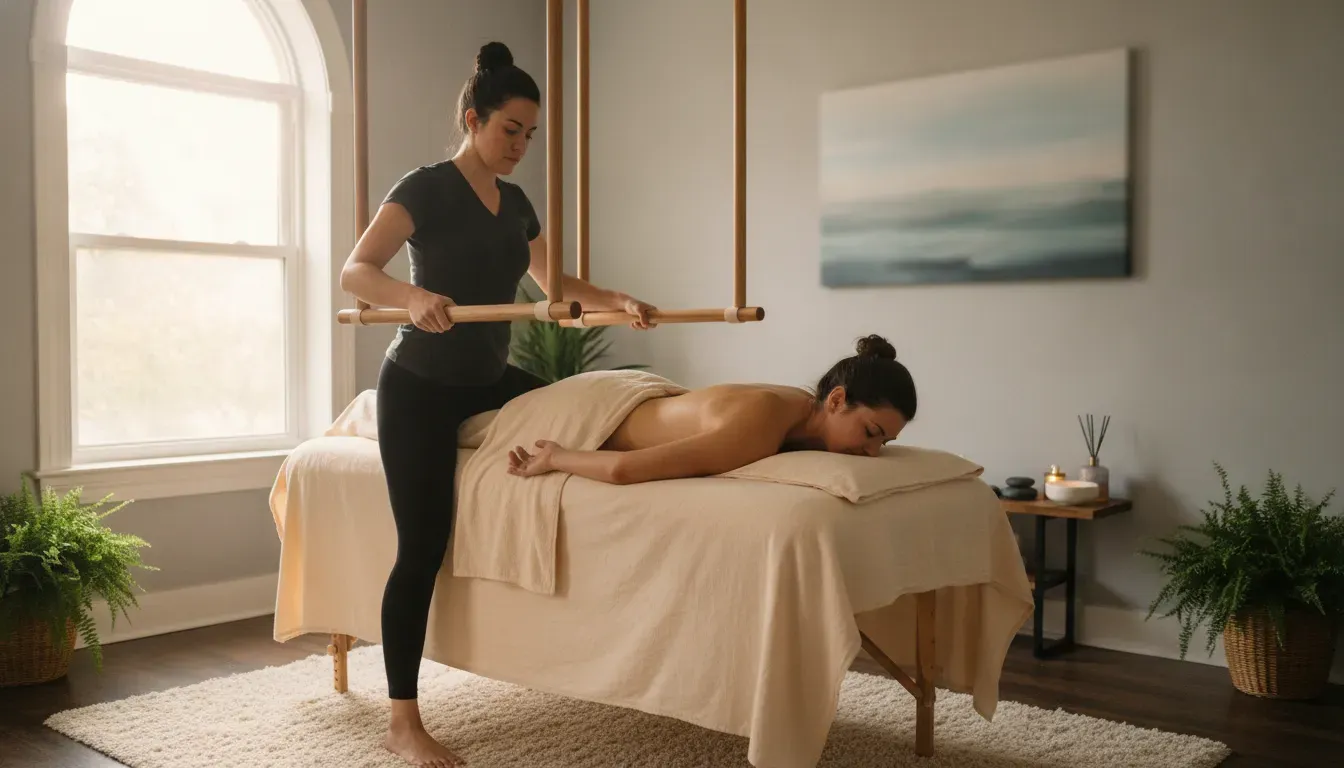
If you work or live in New Orleans’ Central Business District and want deep, steady bodywork without sharp elbow pressure, you may search for ashiatsu massage New Orleans CBD. The key question is what the experience actually feels like. At NOLA Bliss Massage, Ashiatsu DeepFeet Bar Therapy uses overhead bars, clean bare feet, and adjustable body weight to create broad pressure on a fully draped massage table. The therapist can build gradually instead of treating intensity as the only goal. In this guide, you will learn how the technique differs from hands-on deep tissue work, how to choose a session length, and what to know before booking.
Book an Ashiatsu massage in the New Orleans CBD
One note about the acronym: in this guide, “CBD” means the Central Business District, not cannabidiol. If you are looking for information about a CBD oil massage enhancement, you can read NOLA Bliss Massage’s CBD massage benefits guide instead.
Why choose ashiatsu massage new orleans cbd workers can book?
Ashiatsu can be a practical fit for people whose workday involves long hours at a desk, standing, commuting, travel, or repeated physical effort. The therapist uses the sole of the foot to distribute pressure over larger areas, while the overhead bars help control balance, pace, and depth. The result is a broad, grounded style of massage that can be customized rather than treated as an all-or-nothing deep-pressure service.
For CBD residents, convenience matters as much as technique. NOLA Bliss Massage is located at 322 Lafayette Street, Suite 300, in the Downtown New Orleans and Warehouse District area. The studio is by appointment, with same-day appointments normally available when the schedule allows. Guests can also use the studio’s free parking information to plan the visit before leaving work or home.
This local guide is intentionally different from a general definition of Ashiatsu. If you want the broader mechanics and history of the method, read NOLA Bliss Massage’s Ashiatsu massage guide for New Orleans. Here, the focus is the local decision: how to choose a session around a CBD schedule, what pressure to request, and how to compare Ashiatsu with hands-on work.
How does Ashiatsu DeepFeet Bar Therapy work?
Ashiatsu DeepFeet Bar Therapy is a barefoot massage method in which a trained massage therapist uses overhead bars for stability while applying controlled, broad pressure with the feet. The client remains comfortably draped on a massage table. The bars allow the therapist to adjust how much body weight travels through each movement, which supports consistent pressure and ongoing communication.
The name describes the basic method: ashi means foot and atsu means pressure. In professional practice, however, Ashiatsu is not simply walking on someone. The therapist works from a stable position, uses specific foot placements and gliding patterns, and checks how the client is responding. Pressure can be lighter, moderate, or deeper depending on the person’s preferences, goals, and health history.
NOLA Bliss Massage specializes in this approach and identifies itself as the only certified Ashiatsu DeepFeet Bar Therapy training center on the Gulf Coast. The studio’s service is delivered by licensed massage therapists in a professional setting. For a closer look at why provider-specific training matters, see this guide to Ashiatsu therapist training and certification.
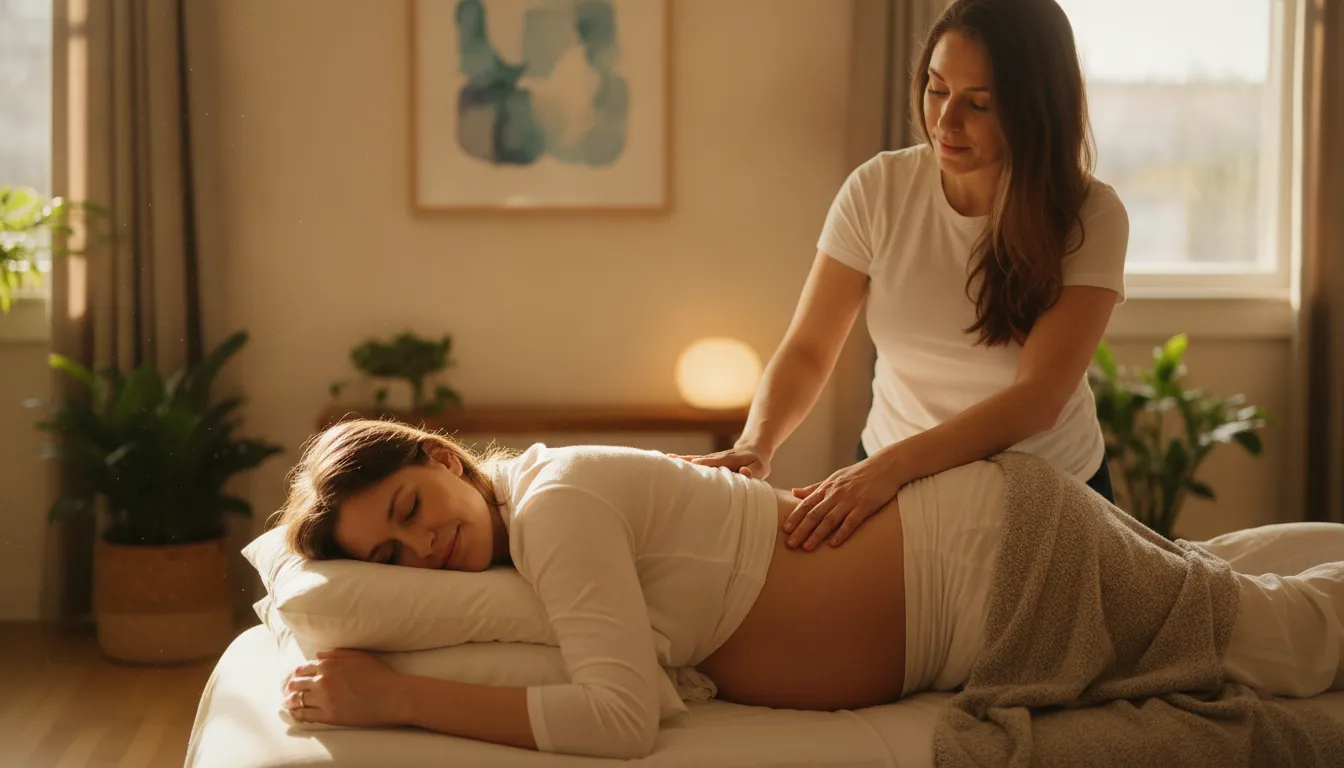
The therapist and client should also agree on boundaries before the session starts. Share areas of pain, recent injuries or procedures, pressure preferences, medications, pregnancy, and any position that is uncomfortable. A qualified therapist can then decide which areas and techniques are appropriate, modify the session, or recommend another service when needed.
What does Ashiatsu pressure feel like compared with deep tissue massage?
Ashiatsu usually feels broad, steady, and compressive, while hands-on deep tissue massage can feel more targeted through fingers, knuckles, forearms, or elbows. The best choice depends on whether you prefer larger flowing strokes or focused work on a smaller area. Neither technique is automatically better, and both should be adjusted to your comfort.
| Consideration | Ashiatsu DeepFeet Bar Therapy | Hands-on deep tissue |
|---|---|---|
| Primary tool. | Therapist’s clean bare feet with overhead-bar support. | Hands, fingers, forearms, knuckles, or elbows. |
| Pressure pattern. | Broad, steady contact across larger muscle groups. | More localized pressure and detailed work on specific areas. |
| Best fit for. | People who enjoy deep, flowing pressure and a grounded sensation. | People who want focused hands-on attention or do not want barefoot work. |
| Customization. | Depth, pace, direction, and areas worked can be discussed throughout. | Depth, pace, tools, and areas worked can also be adjusted throughout. |
If you are unsure, describe the sensation you want rather than requesting the deepest possible pressure. You might ask for “firm but not sharp,” “slow and broad,” or “lighter around my lower back” pressure. Your therapist can then increase or reduce the intensity based on your feedback.
For a deeper side-by-side explanation, read Ashiatsu versus deep tissue massage. If your main concern is a specific pain pattern, a New Orleans massage guide for back pain may help you prepare more focused questions for the consultation.
What happens during a first Ashiatsu visit?
Your first visit should begin with a brief conversation, not an immediate jump into deep pressure. The therapist can ask what brought you in, which areas feel tense, and whether you have any relevant health considerations. You can ask how the overhead bars work, where the therapist plans to begin, and how you will signal if the pressure needs to change.
After the consultation, you will have time to prepare privately and get comfortably positioned on the massage table. The therapist should explain the draping, confirm the starting pressure, and begin with controlled movements. A first session is a chance to learn how your body responds. It is not a test of how much intensity you can tolerate.
For a CBD worker fitting massage between obligations, this gradual start can make the appointment easier to plan. You may prefer a focused 60-minute session at first, then decide whether a longer visit or a different service better fits your routine. If you are a nearby resident, you can use the same conversation to establish a repeatable pressure plan and note areas that respond well to broad footwork.
Which Ashiatsu session length should you choose?
NOLA Bliss Massage lists 60-, 90-, and 120-minute Ashiatsu DeepFeet Bar Therapy options. A 60-minute visit can be a useful introduction or a focused appointment. A 90-minute session allows more time for a full-body flow or several areas of tension. A 120-minute appointment offers the most room for a thorough pace, additional transition time, and attention to multiple regions. Confirm current availability when booking.
- Choose 60 minutes if you are new to Ashiatsu, have a tight workday, or want to focus on one or two main areas.
- Choose 90 minutes if you want a fuller session with time for your back, hips, legs, shoulders, or another combination of areas.
- Choose 120 minutes if you prefer an unhurried appointment and want time to address several regions without rushing transitions.
Your ideal length is not determined by how much pressure you want. A longer visit does not require a more intense treatment. It can simply provide more time for consultation, gradual progression, repositioning, and a full-body plan. If you are between options, explain your schedule and goals during booking so the studio can help you select a practical starting point.
Choose your Ashiatsu session time and request an appointment online
How should you prepare for Ashiatsu near the New Orleans CBD?
Prepare by allowing enough time to arrive, sharing relevant health information, wearing whatever helps you feel comfortable before changing for the session, and communicating clearly about pressure. You do not need to perform special stretches or arrive with a complicated routine. A calm consultation and honest feedback are more useful than trying to predict the exact technique your body will need.
- Plan the route. Review the parking details and allow time to move from your office, hotel, or home to 322 Lafayette Street, Suite 300.
- Share your goals. Mention whether you want relaxation, broad deep pressure, post-work tension relief, athletic recovery, or attention to a particular region.
- Discuss health considerations. Tell the therapist about current injuries, recent procedures, medical conditions, medications, pregnancy, or areas that should be avoided. When in doubt, ask your healthcare professional whether massage is appropriate for you.
- Set a pressure starting point. Ask for the sensation you prefer, such as slow, moderate, firm, or lighter around a sensitive area.
- Give feedback during the session. You can request less pressure, more pressure, a different pace, a pause, or a change in positioning at any time.
Comfort also includes draping and privacy. A professional session should explain what to expect, keep you appropriately covered, and make it clear that you can pause or stop. NOLA Bliss Massage’s Ashiatsu safety guide offers additional questions to consider when evaluating whether the technique is appropriate for you.
What makes NOLA Bliss Massage a local Ashiatsu option?
NOLA Bliss Massage combines a Downtown New Orleans location with specialized Ashiatsu DeepFeet Bar Therapy, licensed massage therapists, and an appointment process designed around an individual consultation. The studio is positioned for people who live or work near the CBD, Warehouse District, French Quarter, hotels, and event venues, while still offering a dedicated therapeutic setting rather than a quick walk-in treatment.
The studio’s differentiators are relevant when comparing providers:
- Specialized Ashiatsu focus: NOLA Bliss Massage centers its signature Ashiatsu DeepFeet Bar Therapy on overhead-bar stability and controlled barefoot pressure.
- Training authority: The studio identifies itself as the Gulf Coast’s only certified Ashiatsu DeepFeet Bar Therapy training center.
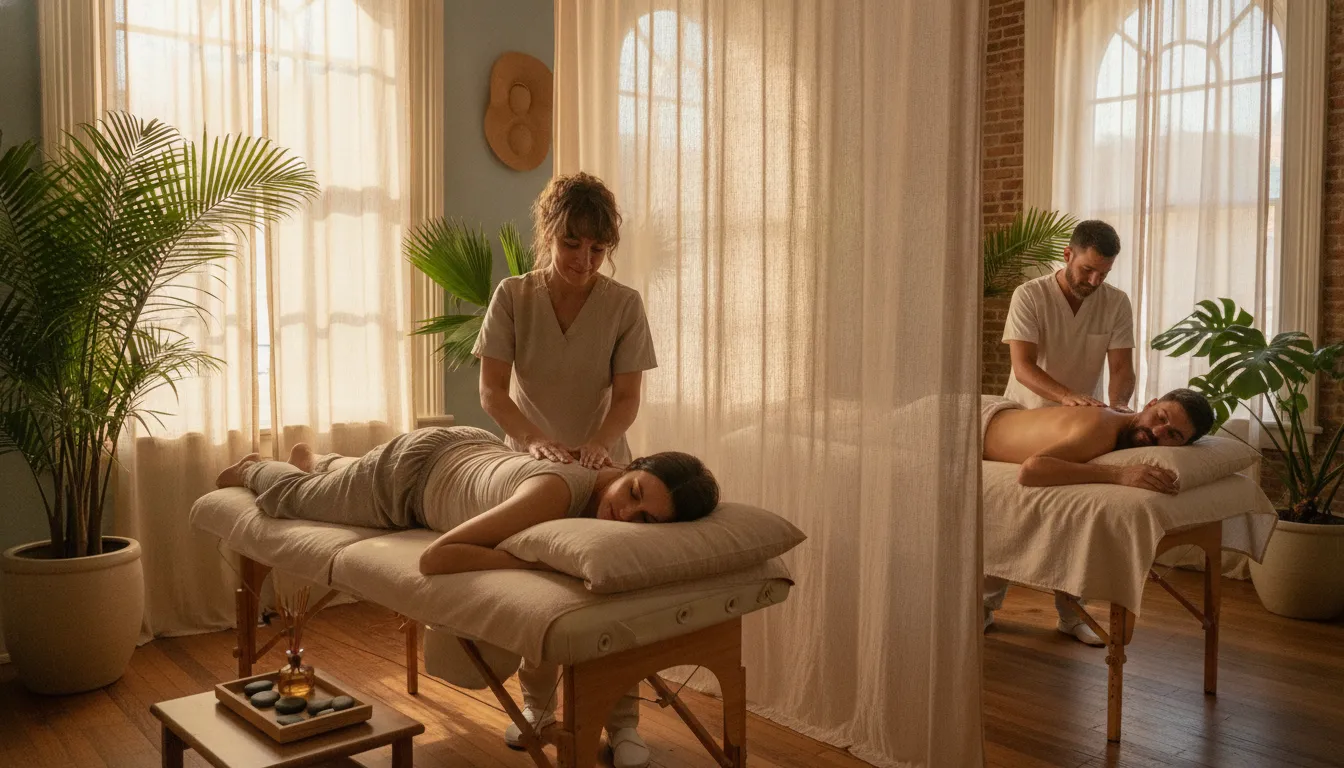
- Service choice: Guests can discuss Ashiatsu, Swedish or deep tissue massage, prenatal massage, couples massage, and other options on the massage services page.
- Central location: The studio is at 322 Lafayette Street, Suite 300, with free parking information available online.
- Appointment planning: Same-day appointments are normally available when scheduling allows, but booking ahead is the safer choice for a preferred time or longer session.
For local context beyond Ashiatsu, the studio’s Warehouse District massage guide explains why the location can work for residents, downtown workers, and visitors planning bodywork around a New Orleans itinerary.
What questions should you ask before booking?
A short pre-booking conversation can clarify whether Ashiatsu is a fit, how the session will be customized, and which length makes sense for your schedule. Ask about therapist training, the use of overhead bars, pressure adjustments, the areas you want addressed, and any health concern that could affect the session. Clear questions help set realistic expectations before you arrive.
- Is Ashiatsu DeepFeet Bar Therapy available at the time I need?
- Can the therapist begin with moderate pressure and adjust from there?
- Should I choose 60, 90, or 120 minutes for my goals?
- What should I disclose about an injury, medication, procedure, or pregnancy?
- Where should I park, and how early should I arrive?
- Would hands-on deep tissue or another service be a better fit for my preference?
These questions are especially useful if you work in the CBD and have only a limited window between meetings, or if you live nearby and want a regular treatment plan. The right provider should welcome practical questions rather than treating them as an inconvenience.
Book your New Orleans CBD Ashiatsu consultation online
Frequently asked questions about Ashiatsu massage in New Orleans CBD
Is Ashiatsu massage the same as someone walking on your back?
No. Professional Ashiatsu DeepFeet Bar Therapy uses overhead bars, controlled foot placement, appropriate draping, and therapist-guided pressure. The client should be able to communicate throughout the session, and the therapist should adjust or stop the work when requested.
Can Ashiatsu pressure be customized?
Yes. Talk with the therapist about your preferred depth, pace, and sensitive areas before and during the appointment. Ashiatsu does not have to mean maximum pressure. A gradual start can help you identify whether broad, steady foot pressure feels right for your body.
How long is an Ashiatsu session at NOLA Bliss Massage?
NOLA Bliss Massage lists 60-, 90-, and 120-minute Ashiatsu DeepFeet Bar Therapy options. Availability can change, so confirm the current schedule and select the length that fits your goals, travel time, and comfort with a first visit.
Where is NOLA Bliss Massage located?
NOLA Bliss Massage is located at 322 Lafayette Street, Suite 300, in Downtown New Orleans near the Central Business District and Warehouse District. Review the studio’s parking information and book ahead when you need a specific appointment time.
Can I choose hands-on deep tissue instead?
Yes. NOLA Bliss Massage offers hands-on massage services as well as Ashiatsu DeepFeet Bar Therapy. If you prefer focused pressure from hands, forearms, or elbows, mention that preference while booking so the studio can help you choose an appropriate service.