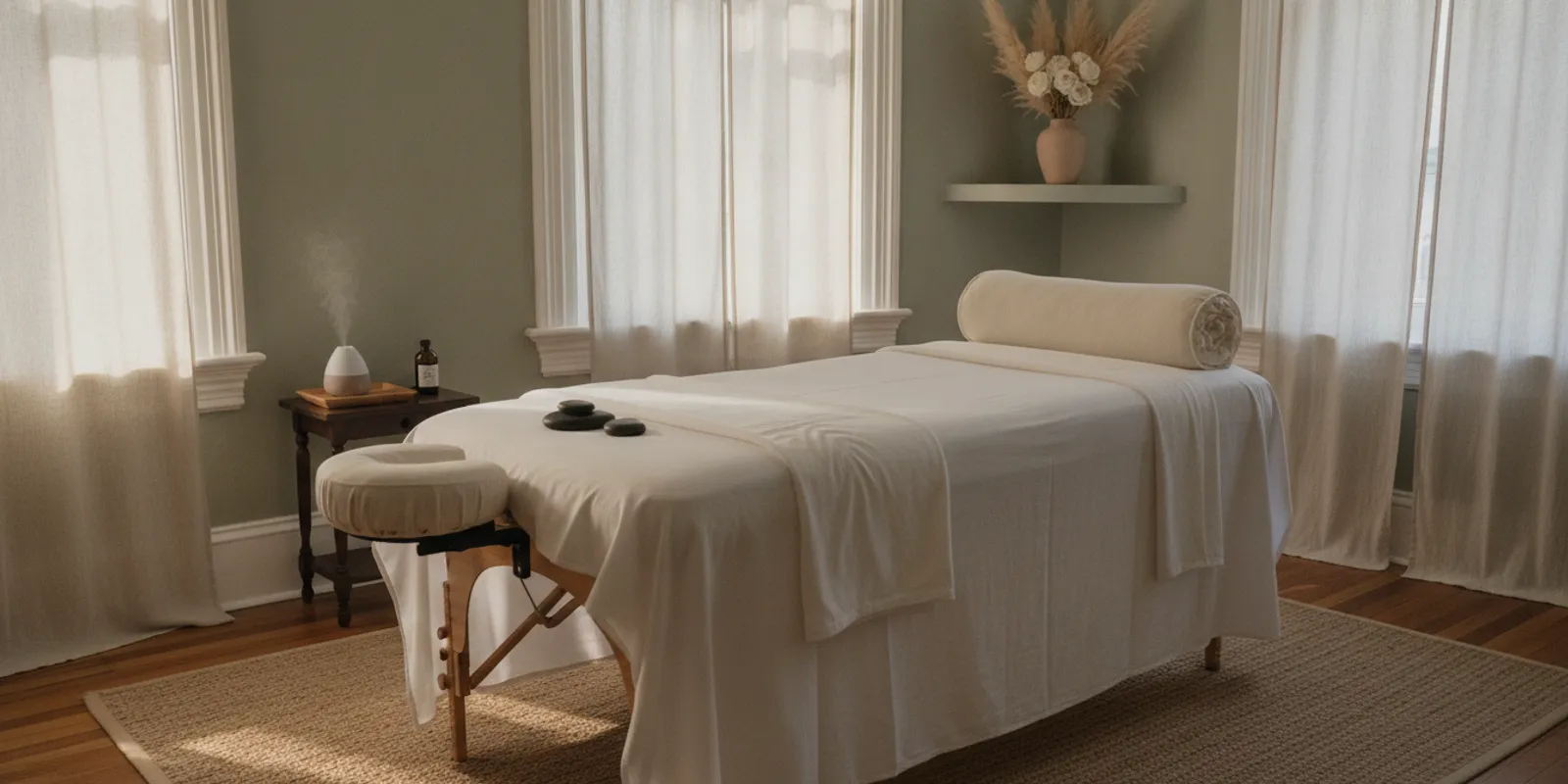

Menopause can change how your body feels from week to week. Sleep disruption, muscle or joint discomfort, hot flashes, and shifting stress levels may all affect what feels supportive during a massage session. A comfortable experience starts with listening rather than assuming what your body needs.
Book a massage appointment with NOLA Bliss Massage.
Massage for menopause may offer a supportive way to slow down, ease everyday muscle tension, and create a more comfortable relaxation experience. But it does not treat or cure menopause, hot flashes, hormonal changes, or an underlying medical condition. The most useful session is individualized: you can discuss pressure, temperature, positioning, areas to avoid, medications, and health concerns with your therapist. If symptoms are new, severe, unusual, or medically concerning, speak with a licensed healthcare professional first.
At NOLA Bliss Massage in Downtown New Orleans, you can ask about available massage approaches and how pressure can be adjusted to your tolerance. Understanding what massage may and may not do, and where medical guidance belongs, can help you choose a session that feels respectful and informed.
What Can Massage for Menopause Help With, and What Are Its Limits?
Massage for menopause may offer a calm, supportive space when your body feels tense, tired, or less comfortable than usual. The National Center for Complementary and Integrative Health explains that massage therapy involves manipulating the body’s soft tissues. It may be used to enhance wellness or help manage a health condition. It is best understood as supportive care, not a treatment for menopause itself.
Book a massage appointment with NOLA Bliss Massage.
What support might massage offer?
A session may help you settle into relaxation and make it easier to notice where you are holding tension. Gentle, individualized work can also support a sense of muscle comfort, especially when stress and physical strain are affecting how you move or rest. If you are exploring the potential benefits of massage therapy, think in terms of comfort and well-being rather than a guaranteed outcome.
Some evidence suggests massage therapy may help with neck or shoulder pain, although any benefit may last only a short time. That limitation matters: feeling better after a session does not necessarily mean the underlying cause of pain has changed. A conversation about pressure, positioning, and what feels comfortable can help keep the session responsive to your needs.
What can massage not do?
Massage does not stop hormonal changes, cure hot flashes, or replace medical evaluation and treatment. It may complement the care you receive, but it should not be used to diagnose or manage symptoms that need clinical attention. For broader ideas about using massage as part of a stress-management routine, see our guide to massage for stress relief.
Massage is not entirely risk free, although serious adverse events are probably rare. Share relevant health information, medications, injuries, and concerns with your healthcare professional and massage therapist before a session. Stop or adjust the treatment if something feels painful, unusual, or simply not right. The goal is a comfortable experience that respects your body and works alongside, rather than instead of, appropriate medical care.
Why Does Menopause Comfort Look Different for Each Person?
There is no single menopause experience, so there is no universal way to plan massage for menopause. Menopause is reached after 12 consecutive months without a menstrual period, while perimenopause is the transition leading up to it. Perimenopause can last from two to eight years, with an average of about four years, so the timing and day-to-day experience may change considerably. Mayo Clinic explains the stages and variability of menopause.
Symptoms also differ from person to person. The National Institute on Aging lists possibilities such as hot flashes, night sweats, trouble sleeping, joint and muscle discomfort, mood changes, and difficulty concentrating. Some people experience several of these concerns, while others notice few or none. Your comfort goals may also change from one appointment to the next. You might want quiet relaxation after a restless week, support for general muscle tension, or simply a session where you can stay cool and in control.
Your goals and boundaries matter
An inclusive approach does not assume a client’s gender, symptoms, body, relationship to menstruation, or preferred type of care. Before a session, consider what would help you feel comfortable. You can request lighter pressure, ask for adjustments to the room temperature, identify areas to avoid, or pause the session at any time. These preferences are useful information, not an inconvenience.
It can also help to distinguish comfort care from medical care. Massage may support relaxation and a sense of ease, but it does not diagnose or treat menopause, hormonal changes, hot flashes, or other medical conditions. If symptoms are bothersome, changing, or affecting daily life, discuss them with a qualified healthcare professional. For additional context on client control, see this guide to consent and comfort during massage. If sleep is a concern, you may also find practical ideas in this resource on massage and relaxation for sleep.
Which Massage Style and Pressure May Fit Your Needs?
There is no single best massage style for every person, and menopause does not create a preset pressure requirement. Your comfort can change from one visit to the next, especially if you are experiencing tenderness, fatigue, muscle tension, or simply a different tolerance for touch. A useful starting point is to choose the approach that matches how you want the session to feel, then communicate throughout the appointment.
| Approach | What to expect | Useful conversation |
|---|---|---|
| Swedish massage | Long, flowing strokes with customizable light-to-medium pressure. | Ask for a lighter touch, slower pace, or changes to areas that feel sensitive. |
| Deep tissue massage | Hands-on work with pressure customized to individual needs. | Discuss your goals and set a clear pressure limit. More intensity is not automatically more helpful. |
| Gentle customized approach | A session that adjusts pressure and technique to your tolerance and preferences. | Share what feels supportive, what to avoid, and when you want the therapist to pause or modify. |
Swedish massage may suit someone who wants broad, soothing work without a strong sensation. You can read more about gentle Swedish massage for relaxation before deciding whether its flowing strokes fit your goals. Deep tissue work may be worth discussing when you want focused attention on areas of muscular tension. But the pressure should still be adapted to you rather than treated as a test of endurance.
A customized session does not have to follow one modality from beginning to end. Your therapist may select techniques and adjust pressure based on your feedback, comfort, and stated goals. Before booking, you can review Swedish and deep tissue massage services and consider which questions you want to bring to your intake.
Tell the therapist if you want less pressure, a different position, an area avoided, or a pause. Those requests are part of effective communication, not an interruption. Massage can be supportive comfort care, but it is not a treatment for menopause itself. If pain or another symptom is new, severe, or concerning, discuss it with a licensed healthcare professional before choosing a modality.
How Can You Plan a Comfortable Massage Session?
A comfortable session starts with an honest conversation, not a particular massage style. During intake, share relevant medical history, current discomfort, your goals, and any areas you prefer the therapist to avoid. Before booking, ask the studio how it handles these preferences and how the session can be adjusted to your comfort. You do not need to use medical terminology. Explain what you notice and what would help you feel at ease.
Consent should remain active throughout the appointment. You can ask questions before the massage, request a change in position, or pause at any time. Draping is adjusted to preserve privacy while leaving only the area being worked on exposed. If you tend to feel warm, chilled, or sensitive to room temperature, mention it before or during the session. Small adjustments to blankets, clothing, or positioning can make the experience more manageable.
Pressure feedback is useful, especially when your comfort changes from one area or day to the next. Say “lighter,” “more pressure,” “please stay here,” or “stop for a moment” as soon as you need to. Therapists can adjust pressure to your tolerance and select techniques that fit your stated needs. A session should not require you to endure pain to be worthwhile.
Choosing a therapist you trust also matters. You may want to ask about communication, experience, and how the therapist handles modifications. NOLA Bliss describes its team as licensed Louisiana massage therapists with more than 10 years of average experience, and you can ask the studio any questions about therapist credentials or communication before booking. You can read more about choosing a massage therapist you trust before scheduling.
At NOLA Bliss in the Warehouse District of Downtown New Orleans, appointments are scheduled without overbooking, supporting dedicated treatment time. When you contact the studio, describe your goals, preferred pressure, temperature or positioning concerns, and any health questions you plan to discuss with a clinician. You can also review guidance on planning a comfortable massage session for practical communication ideas.
When Should You Ask a Clinician Before Massage?
Massage can be a supportive wellness practice, but it is not a substitute for diagnosis or medical treatment. If a symptom is new, severe, unexplained, or changing, speak with a qualified healthcare professional rather than relying on massage for menopause-related comfort. Continue routine wellness visits before, during, and after menopause, and bring questions about symptoms to your clinician.
Postmenopausal vaginal bleeding or spotting deserves prompt medical attention. The Mayo Clinic advises contacting a healthcare professional as soon as possible if bleeding occurs after menopause. A massage appointment should wait until you have received appropriate medical guidance and understand whether any precautions are needed.
It is also wise to ask a clinician before booking if you have a diagnosed condition, are recovering from an illness or procedure, or are taking medications that could affect bleeding, sensation, blood pressure, skin integrity, or your ability to tolerate pressure. You do not need to disclose private details beyond what helps your healthcare provider and massage therapist make safe decisions. Both should have the information relevant to your care.
Which symptoms belong in a medical conversation?
Talk with a doctor about menopausal symptoms that interfere with daily life or remain difficult to manage. The National Institute on Aging recommends discussing lifestyle changes or medications that may help when symptoms are bothersome. Ongoing sleep problems also warrant a conversation with a doctor, rather than being treated only as a reason to schedule a relaxing session. Poor sleep can affect mood, memory, and safety, so persistent problems deserve proper evaluation.
Massage may still fit into a broader wellness plan after your clinician has addressed the concern or confirmed that massage is appropriate. Share any guidance with your therapist before the session. You can also review massage safety and health considerations before deciding what questions to ask.
When should you pause or change the session?
During the appointment, speak up about pain, dizziness, nausea, shortness of breath, unusual discomfort, feeling overheated, or any change that makes you want to stop. Ask for lighter pressure, a different position, more ventilation, a break, or an end to the session. You remain in control of consent throughout the appointment. A reputable therapist will treat your feedback as useful clinical communication, not an inconvenience.
When in doubt, choose medical guidance first. Once concerns are evaluated and massage is appropriate, individualized communication can help make a session more comfortable without promising to treat the underlying condition.
What Questions Should You Ask Before Booking Massage for Menopause?
Before booking, ask what you hope to feel during and after the session. Massage may support relaxation, ease some muscular tension, or provide a quiet break, but it is not a treatment for menopause itself. Menopause symptoms vary widely, and a massage should be planned around your current comfort rather than a fixed protocol.
Will massage stop hot flashes?
No reliable evidence supports massage as a way to stop hot flashes. Hot flashes can follow different patterns in timing and duration, so notice when they occur and what seems to trigger them. If heat is a concern, ask whether the room temperature, blankets, draping, or positioning can be adjusted. You can pause, uncover an area, take a drink of water, or end the session if a hot flash makes you uncomfortable. For bothersome symptoms, discuss established management options with a healthcare professional. The National Institute on Aging recommends talking with a doctor about lifestyle changes or medications that may help.
What should you tell the therapist?
Share the practical information that affects your care: symptoms you are experiencing, areas that feel tender, your preferred pressure, positions that are uncomfortable, relevant medical history, medications, and any areas you want avoided. You do not need to disclose anything you would rather keep private, but your therapist needs enough information to work safely. Ask how you can request a pressure change, repositioning, a pause, or more or less draping. You can also review this guide to consent and comfort during massage.
How often should you book?
There is no medically prescribed massage schedule for menopause. Consider booking when it fits your comfort, budget, and broader care plan, then notice how your body responds. A single visit can help you decide which pressure, temperature, and positioning preferences to communicate next time. If symptoms are changing quickly, severe, or interfering with sleep and daily life, prioritize medical guidance rather than trying to solve them through massage. If you are ready to compare options, explore massage services and discuss a comfortable pressure level before choosing a session.
Modify or stop the session for pain, dizziness, nausea, shortness of breath, unusual discomfort, or any feeling that something is wrong. Seek prompt medical advice for postmenopausal vaginal bleeding, and talk with a clinician about ongoing sleep problems or other concerns.
Plan your massage appointment with NOLA Bliss Massage.
Frequently Asked Questions
Can massage stop hot flashes during menopause?
No. Massage should not be presented as a treatment or cure for hot flashes or other menopause symptoms. It may support relaxation and temporary comfort, but discuss persistent or bothersome symptoms with a healthcare professional. The NIA notes that hot flashes can be uncomfortable and may last for many years: NIA guidance on hot flashes.
What should I tell my massage therapist before a session?
Share your pressure preferences, temperature comfort, sensitive or painful areas, positioning needs, relevant health history, medications, and anything you want avoided. You can request changes or stop at any time. A thorough conversation helps the therapist individualize the session without assuming that menopause feels the same for everyone.
Is gentle massage appropriate if I am experiencing menopause-related discomfort?
It may be a comfortable starting point for some people. Swedish massage commonly uses long, flowing strokes with light-to-medium pressure, and pressure can be adjusted to your tolerance. The right choice depends on your preferences, symptoms, health history, and how your body responds that day.
When should I ask a clinician before booking a massage?
Ask a healthcare professional about symptoms, medications, diagnoses, or other concerns that could affect massage safety. Seek prompt medical advice for vaginal bleeding after menopause. The Mayo Clinic also recommends continuing wellness visits and seeking medical guidance before, during, and after menopause: Mayo Clinic menopause guidance.
Ready to Book a Massage for Menopause?
A personalized massage appointment can give you space to discuss comfort, pressure, positioning, and the kind of support you want from your session. Share any relevant concerns during your intake so your therapist can help tailor the experience to your preferences.