
Long rides ask a lot from the same working chain: your legs turn repeatedly, your hips stay positioned, and your upper body remains steady over the handlebars. A thoughtful recovery routine can help you notice ordinary post-ride tension and choose supportive care without treating every ache as an injury.
Book a massage appointment with NOLA Bliss Massage
Massage for cyclists can be a useful wellness complement for routine muscle soreness and mobility goals, but it is not a guarantee of better performance or a substitute for medical guidance. Research has found small benefits for delayed-onset muscle soreness and flexibility, while not showing direct improvements in strength, endurance, sprinting, or fatigue measures (systematic review).
Explore NOLA Bliss massage services in Downtown New Orleans when you are looking for individualized support alongside your broader recovery habits. Start by considering how massage may fit your recovery plan and what it can realistically contribute.
Why can massage for cyclists support a recovery plan?
Cycling can place repeated demands on the same working muscles, especially during longer rides or changes in training load. Massage for cyclists may fit into a broader recovery plan by giving you time to notice ordinary post-ride tension. Relax areas that feel worked, and choose a level of pressure that matches how your body feels that day. It is best viewed as supportive wellness care, not a replacement for sleep, nutrition, gradual training, or medical evaluation.
The evidence also calls for realistic expectations. A systematic review found small improvements in flexibility and delayed-onset muscle soreness, along with a small benefit for reducing or preventing that soreness. However, it found no evidence that massage improves strength, sprinting, endurance, fatigue, or other direct performance measures. In other words, a comfortable session may help you feel more at ease after demanding activity. But it should not be presented as a shortcut to faster riding or a guarantee of improved performance. Read the sports-massage evidence review for the full findings.
That distinction matters when deciding whether a session belongs in your routine. If your concern is familiar muscle tightness after a ride, you can use these post-workout massage recovery tips alongside your usual habits. If you notice sharp pain, swelling, bruising, numbness, or weakness, seek healthcare guidance. Persistent or worsening symptoms also deserve professional evaluation. Do not treat massage as an injury solution.
Massage can be one supportive option for ongoing care, tension relief, and active lifestyles. In Downtown New Orleans, you can review the available massage services in New Orleans and discuss an approach that feels appropriate for your comfort and general wellness goals. A cyclist-specific protocol or performance promise should not be assumed.
Which areas commonly feel overworked after cycling?
Cycling places much of its repeated workload on the legs, so post-ride tension often gathers across several connected muscle groups rather than one isolated spot. The areas below are practical zones to discuss during a wellness-focused massage, not a checklist for diagnosing an injury. A cyclist-focused self-massage guide also highlights the glutes, hamstrings, quadriceps, calves, and shin muscles as familiar areas of cycling-related workload.
Quads, hamstrings, and glutes
The quadriceps repeatedly help drive the pedals, while the hamstrings and glutes contribute to hip and knee movement. After hills, longer mileage, or a change in training load, these areas may feel generally tight, heavy, or fatigued. Working both sides can help you notice whether the sensation is symmetrical, but a difference between sides is not something to diagnose through massage. For more general guidance on lower-body tension, see this massage for overworked leg muscles.
Calves, shins, and feet
The calves and smaller lower-leg muscles assist the larger muscles during pedaling. The shins and feet can also feel overworked, especially when a rider spends a long time in one position or changes footwear, pedals, terrain, or cadence. These areas usually call for careful, adjustable pressure rather than an assumption that deeper pressure is better. Mention tenderness, sensitivity, or recent changes in riding to the therapist so the approach can stay comfortable.
Hip flexors, lower back, and upper-body posture
A bent riding position can leave the hip flexors and lower back feeling restricted after a long ride. Holding the handlebars for extended periods may also contribute to awareness in the shoulders, neck, upper back, or forearms. These posture-related sensations can be useful conversation points during a session, but they do not establish a cause or confirm an injury. A therapist can adjust positioning and pressure to the areas you want addressed. Explore deep-tissue sports massage options for a broader look at how pressure and focus areas may vary.
Sharp, worsening, or persistent pain, swelling, numbness, weakness, or symptoms after a crash deserve qualified healthcare guidance rather than an attempt to massage through them.
When should you schedule massage around a ride or race?
Timing depends on the work your body has just done, the effort still ahead, and how your muscles usually respond to pressure. There is no universal schedule for massage for cyclists. Use the framework below as a planning tool, then adjust the session with a qualified massage therapist. Research supports modest improvements in flexibility and delayed-onset muscle soreness, but it does not establish that massage improves endurance, speed, or race performance. Read the evidence review for the limits of those findings.
Massage timing ideas for common cycling situations
| Situation | Timing to consider | How to approach it |
|---|---|---|
| Before a race or demanding ride | Schedule a fuller session well before the event, rather than trying unfamiliar, intense work immediately beforehand. | Favor lighter pressure and familiar techniques. Avoid scheduling unfamiliar, intense work immediately before an event; choose a familiar, comfortable approach if you prefer bodywork close to a ride. A brief warm-up approach on event morning may be appropriate in some settings, but it should not be treated as a substitute for preparation. |
| After a hard ride or race | Allow your body time to settle before booking deeper recovery-focused work. | After a hard session, allow your body time to settle and choose a recovery session only if the pressure feels comfortable for you. Hydration, food, rest, and your own response should also shape the plan. |
| Routine maintenance | Choose a repeatable time when normal muscle tension is present but you are not recovering from an unusually hard effort. | Regularity matters more than a fixed calendar rule. Track how your legs feel after rides and communicate whether you want lighter or firmer pressure. For more endurance-event context, see this guide to massage timing around endurance events and this sport-specific massage recovery guide. |
| Pain or other symptoms | Pause and seek qualified healthcare guidance before scheduling massage for a suspected injury. | Sharp, worsening, or persistent pain, swelling, numbness, weakness, or symptoms after a crash need evaluation rather than a timing experiment. Massage is complementary support, not a diagnosis or injury treatment. |
Whichever window you choose, tell the therapist about your recent mileage, intensity, event date, and any areas that feel unusually sensitive. That information helps keep the session appropriate without assuming that every cyclist needs the same pressure or technique.
What should you expect from a massage session for cyclists?
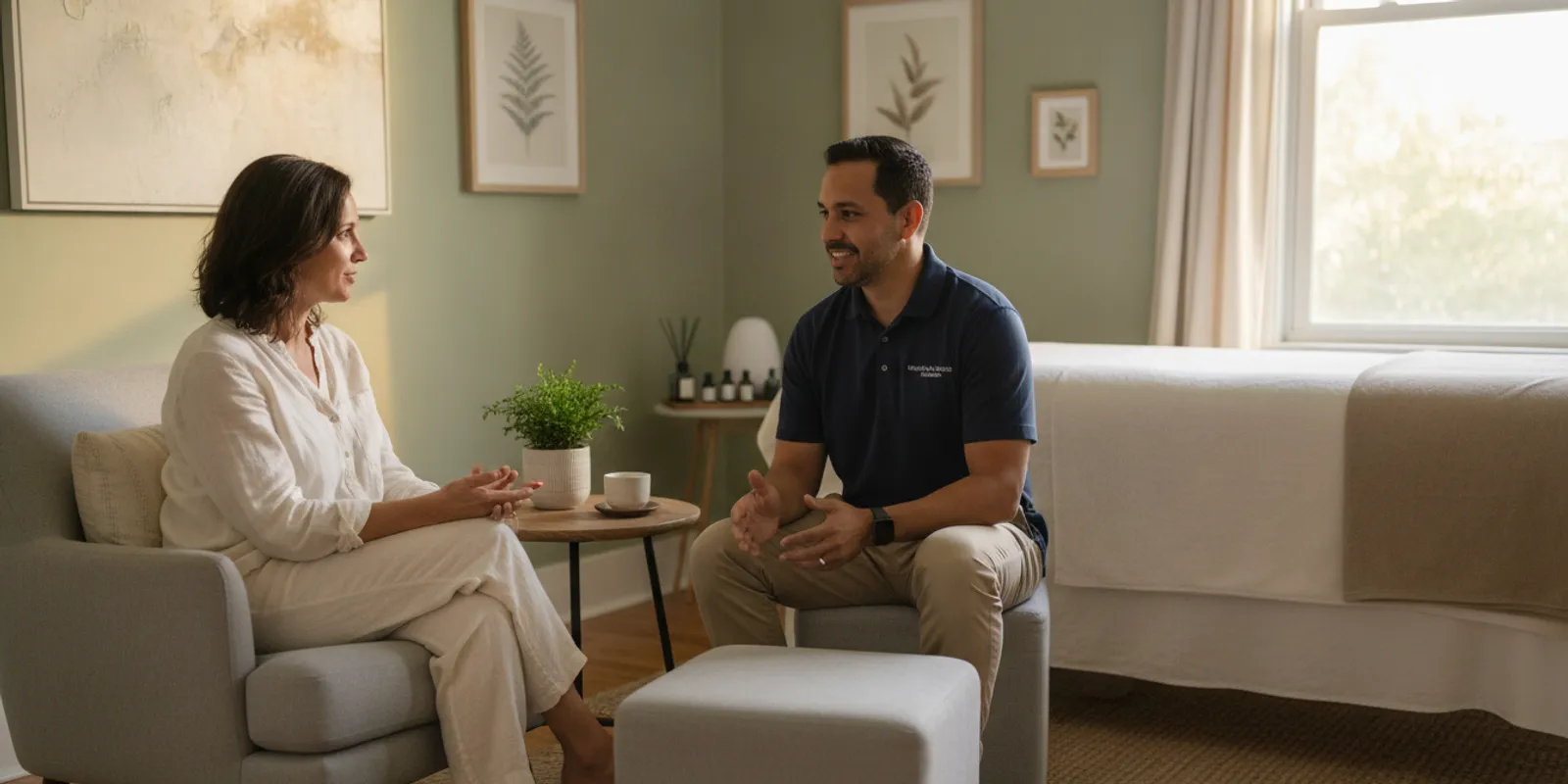
A session should begin with a conversation about what feels tight, what your recent riding has involved, and what pressure feels comfortable. You can identify the areas you want addressed, such as the thighs, calves, glutes, hips, shoulders, or lower back. The goal is not to prove how much pressure you can tolerate. A useful session should be adjusted as you give feedback.
How should you communicate about pressure and focus?
Tell the therapist whether you prefer lighter, moderate, or firmer work, and speak up if a technique feels too intense, sharp, or uncomfortable. Pressure and movement can vary during a massage, and positioning the area in a relaxed, comfortable position may make it easier to work with routine muscle tension. These principles are also useful when comparing sports massage versus deep tissue approaches. A cycling-focused request does not need to mean aggressive treatment or a fixed sequence.
Which NOLA Bliss options may be discussed?
NOLA Bliss Massage lists Swedish and deep tissue massage among its services, and its service page says the massage is tailored to individual needs. Those details can help frame a conversation, but they do not establish that one modality is the right choice for every cyclist, ride, or symptom. Ask about the available pressure and tell the therapist what feels comfortable. A session may focus on general tension and relaxation rather than diagnosing or treating an injury.
NOLA also offers Ashiatsu, a barefoot technique that uses overhead bars for support. If you are curious about the approach, you can learn more about Ashiatsu massage for athletes and then discuss whether it is appropriate for your preferences. NOLA Bliss does not publish a cyclist-specific protocol, so the most accurate expectation is an individualized wellness session, not a guaranteed performance or recovery result.
How can massage fit with other cycling recovery habits?
Massage works best as one part of a broader recovery routine, not as a replacement for the basics. After a demanding ride, consider how your overall energy, comfort, and training load are developing before deciding whether hands-on work or self-massage feels appropriate.
- Rehydrate according to your needs. Replace fluids after a ride and continue paying attention to thirst and how you feel. Avoid turning hydration into a rigid formula, since weather, ride length, exertion, and individual needs vary.
- Eat enough to support recovery. A balanced meal or snack can be part of the post-ride routine. Include foods you tolerate well and that fit your normal eating pattern rather than treating one food or supplement as a guaranteed recovery solution.
- Protect your sleep. Consistent, restful sleep gives your body time away from training stress. If your riding schedule is leaving you persistently run down, the answer may be adjusting the overall plan rather than adding more massage.
- Choose gentle movement. An easy walk, relaxed spin, or other comfortable movement may help you stay mobile between harder sessions. Keep the effort easy, and stop if movement increases pain or produces unfamiliar symptoms.
- Use mobility work thoughtfully. Light mobility exercises can help you notice areas that feel restricted. Self-care tools such as a foam roller, massage stick, or tennis ball are options described in cycling recovery guidance, but pressure should remain comfortable. Position the area in a relaxed posture, and do not force a tender spot.
- Watch your training load. Compare how your body feels with recent ride intensity, duration, terrain, and rest. Recurring soreness, declining comfort, or symptoms that keep worsening deserve attention to the training plan and, when appropriate, qualified healthcare guidance. Massage can complement ongoing care and tension relief, as NOLA Bliss describes on its sports massage in New Orleans page, but it is not a way to override warning signs.
Review the NOLA Bliss massage services when you are ready to compare options.
Next, review when a cyclist should seek medical guidance instead of massage, then find answers to common questions about massage for cyclists.
When should cyclists seek medical guidance instead of massage?
Massage for cyclists is best reserved for general muscle tension and wellness support, not for evaluating an injury. Pause your appointment and seek guidance from a qualified healthcare professional if pain is sharp, worsening, or persistent rather than improving with rest. Massage should not be used to push through a symptom that has not been assessed.
Which symptoms call for extra caution?
Ask for medical guidance promptly if you notice significant swelling or bruising, numbness, weakness, or an inability to bear weight on a leg or foot. These signs can have different causes, and a massage therapist is not a substitute for an appropriate clinical evaluation. Avoid trying to work directly on an area that is acutely painful, visibly swollen, or unusually sensitive.
What if symptoms started after a crash?
After a fall or collision, seek healthcare guidance before scheduling massage, even if the discomfort initially seems manageable. A crash can involve more than ordinary post-ride soreness. Tell the healthcare professional what happened, where you were hit, and which movements or activities increase symptoms. Follow their advice about returning to cycling or receiving bodywork.
Research on sports massage does not show direct improvements in strength, endurance, sprinting, or fatigue, although reviews have found small benefits related to delayed-onset muscle soreness and flexibility. Those findings support realistic expectations, not self-treatment of an injury. Review the evidence on sports massage, and use massage as complementary care only after urgent concerns have been addressed.
Book a massage appointment with NOLA Bliss Massage
Frequently Asked Questions About Massage for Cyclists
Is massage helpful after a long ride?
Massage can be a wellness-focused part of recovery when your main concern is ordinary post-ride muscle tension or soreness. It may support comfort and flexibility, but it is not a guarantee of faster recovery or improved cycling performance. A systematic review found small benefits for delayed-onset muscle soreness and flexibility, while finding no evidence of direct performance improvement. Read the research review.
When is the best time to schedule a massage around cycling?
There is no single schedule that fits every rider. For routine recovery, choose a time when you can comfortably rest afterward and tell the therapist whether you recently completed a hard ride or have another event coming up. Lighter work may feel more appropriate close to an event, while deeper pressure may be better reserved for a separate recovery session if it feels comfortable for you.
Which areas should cyclists ask the therapist to focus on?
Common areas to discuss include the quadriceps, hamstrings, glutes, calves, shins, feet, hip flexors, lower back, shoulders, and neck. Your riding position, terrain, training load, and personal comfort can all affect what feels overworked. A therapist can adjust the focus and pressure rather than applying the same routine to every cyclist.
Should massage pressure feel painful?
No. Pressure can be noticeable, but it should remain tolerable and communicable. NOLA Bliss lists both deep tissue and Swedish massage among its services. Ask about the available pressure, and speak up if it feels sharp, alarming, or difficult to tolerate.
When should I seek medical guidance instead of massage?
Seek qualified healthcare guidance for sharp or worsening pain, swelling, bruising, numbness, weakness, inability to bear weight, symptoms after a crash, or discomfort that persists. Massage is not a substitute for evaluation of a suspected injury, and a therapist should not be expected to diagnose the cause.
Book Your Cycling Recovery Massage
If massage fits your recovery routine, an individualized session can help you give overworked areas targeted, comfortable attention while you communicate what feels comfortable. NOLA Bliss Massage offers a practical next step for cyclists seeking supportive care in Downtown New Orleans. Choose a time that works with your riding schedule.